
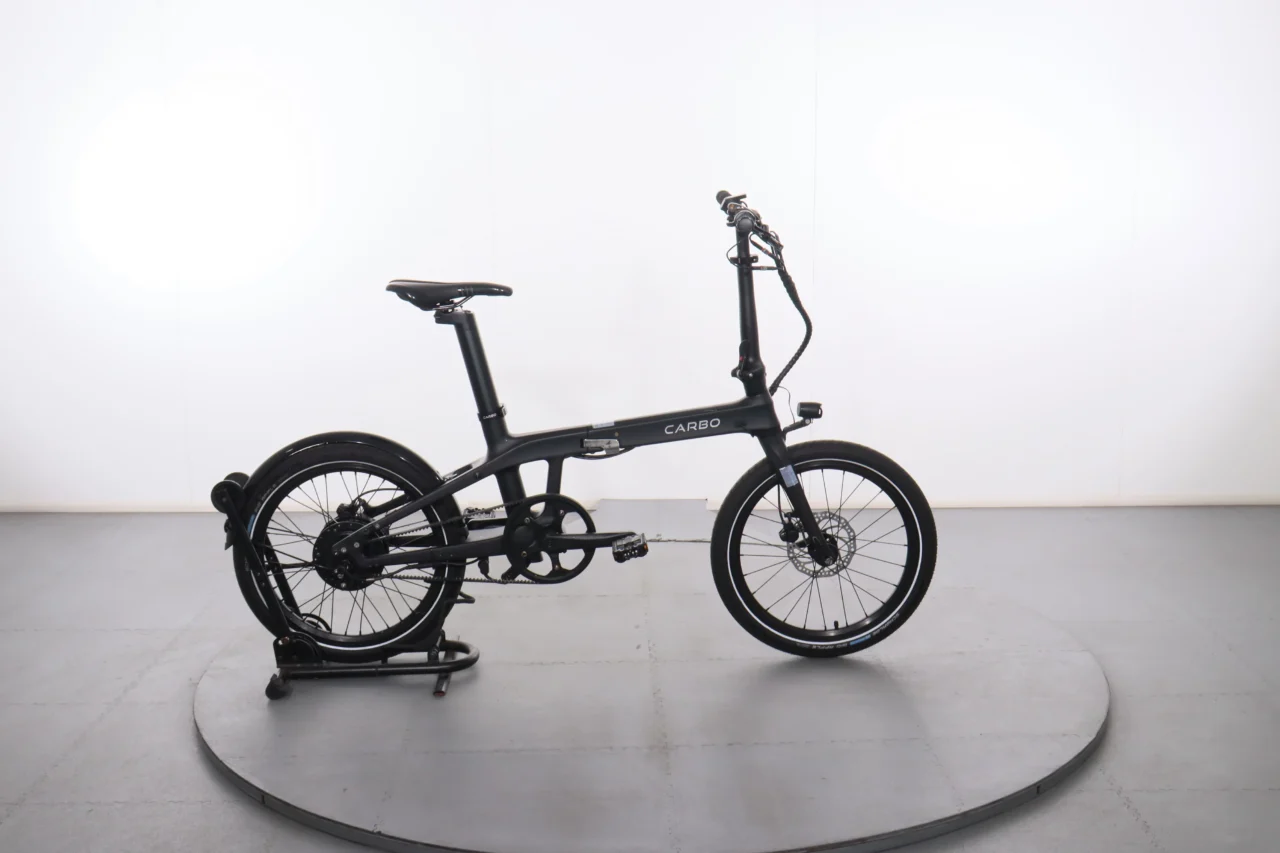
$1,249
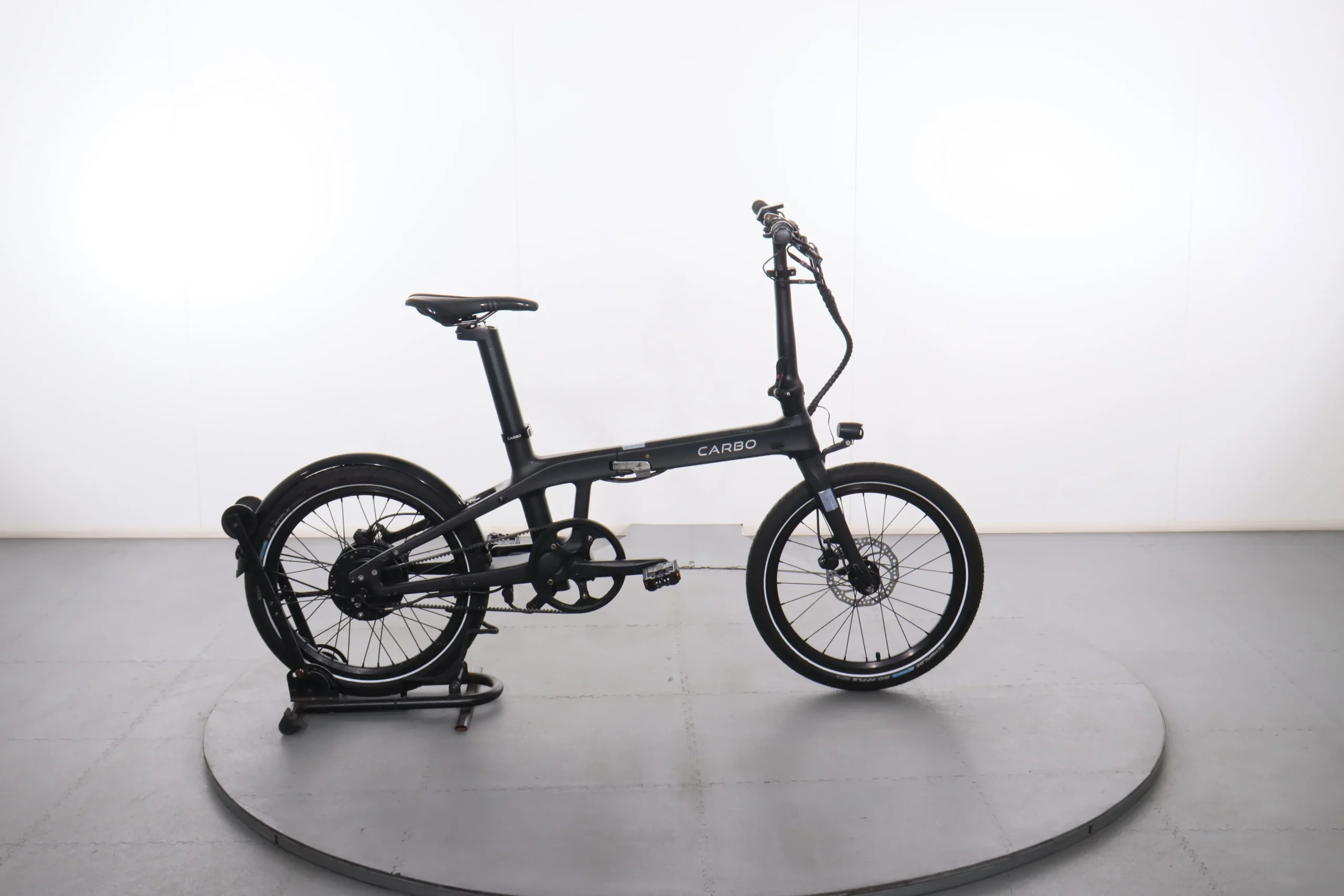
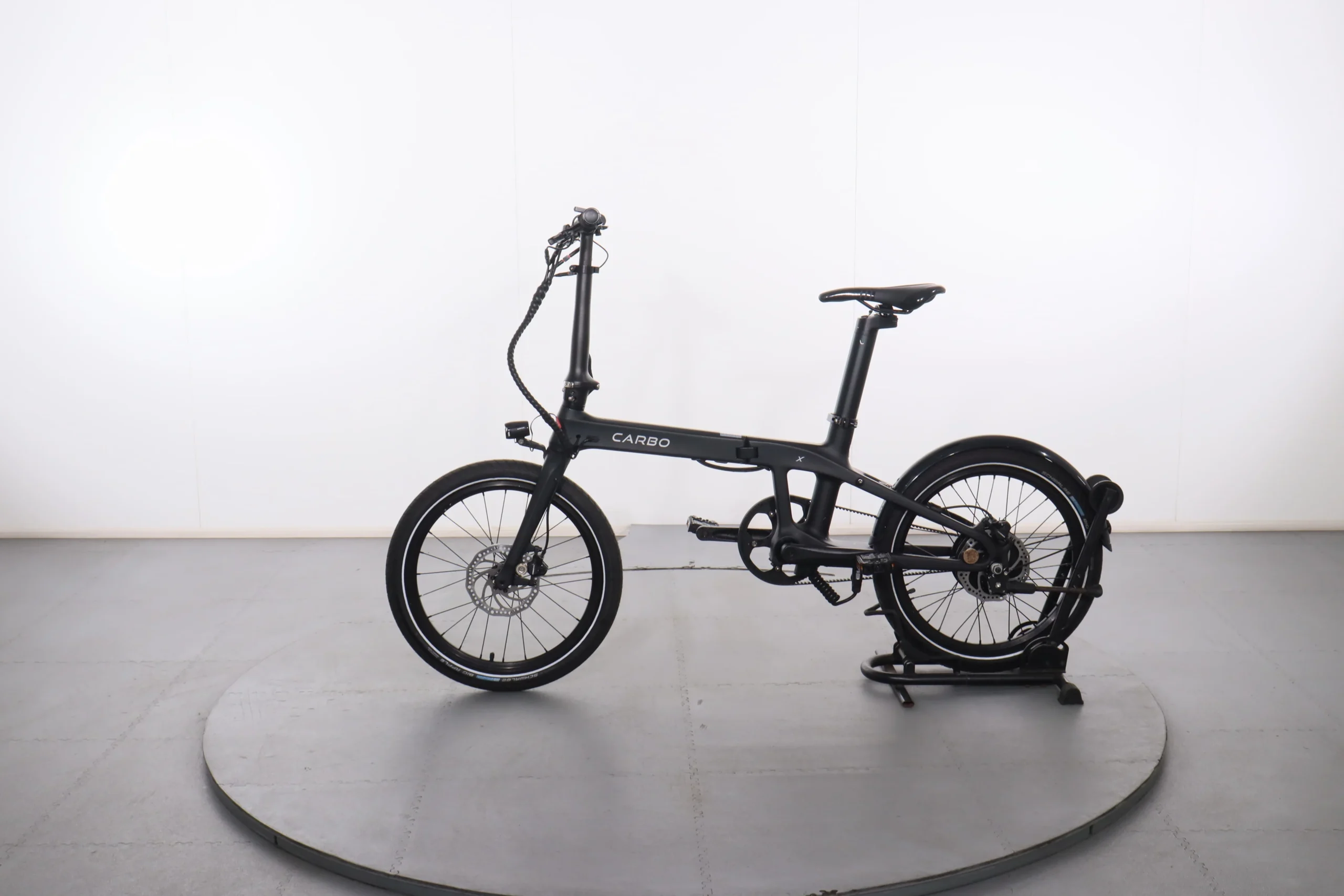
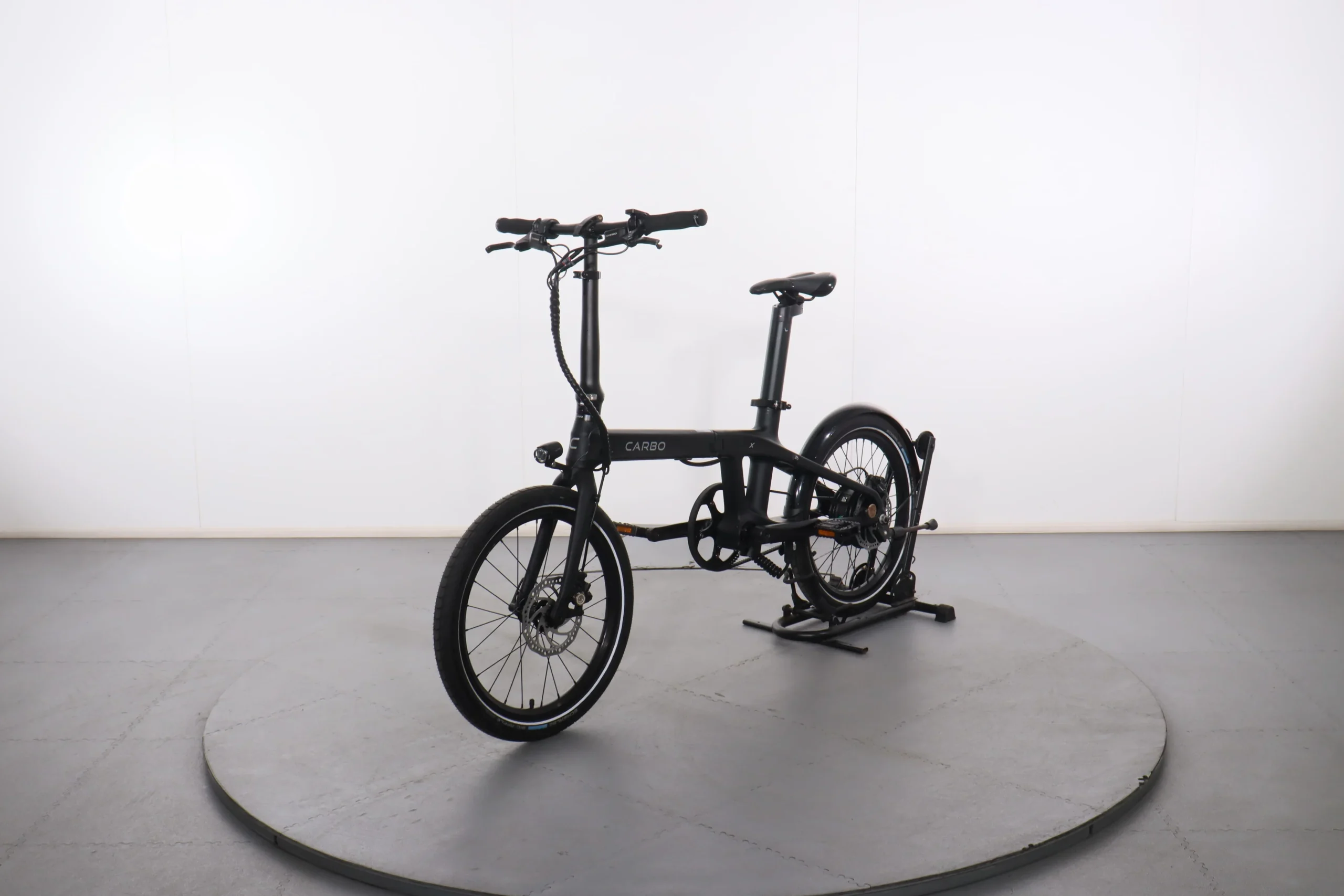
$2,699 new -54%
Why we love it
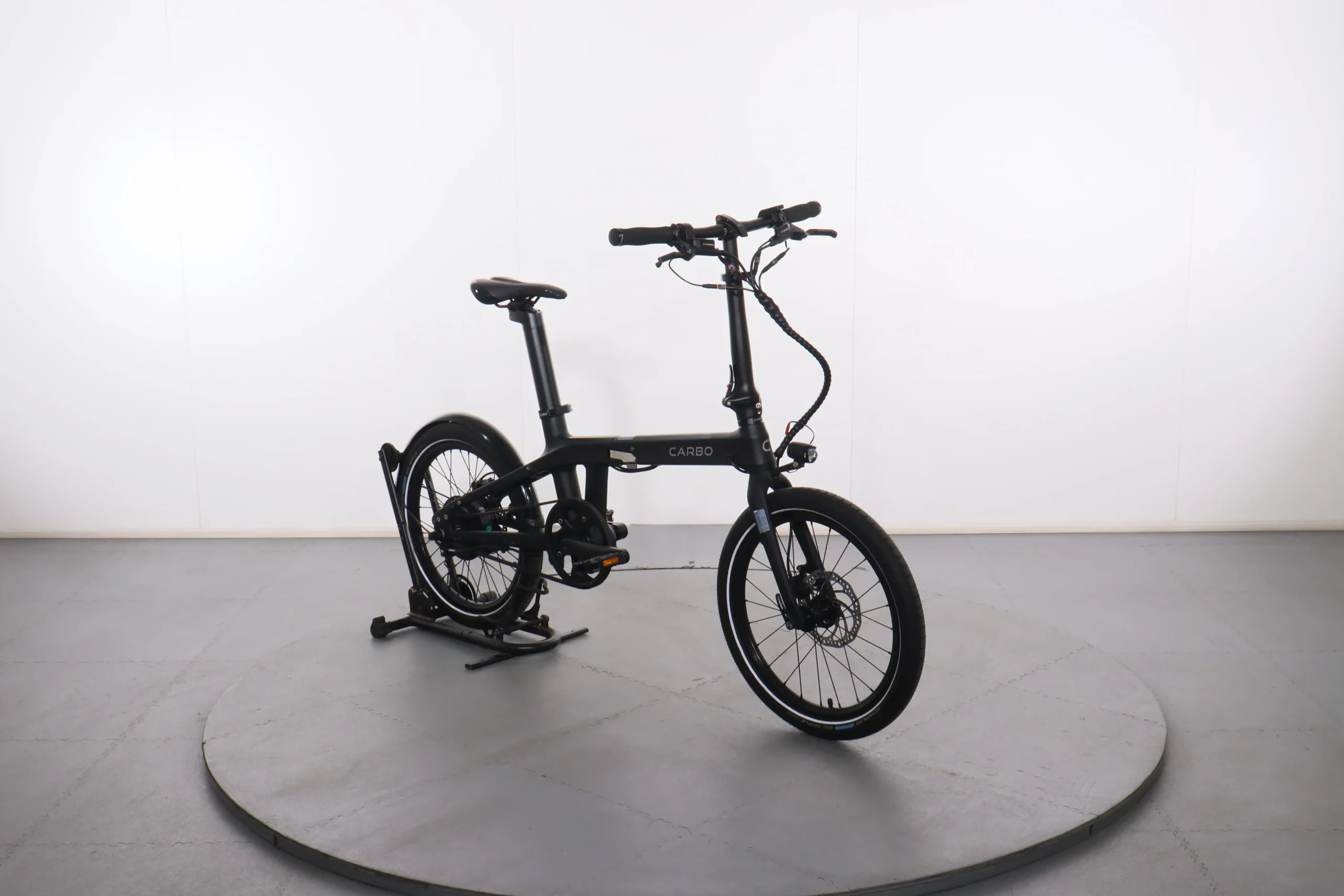
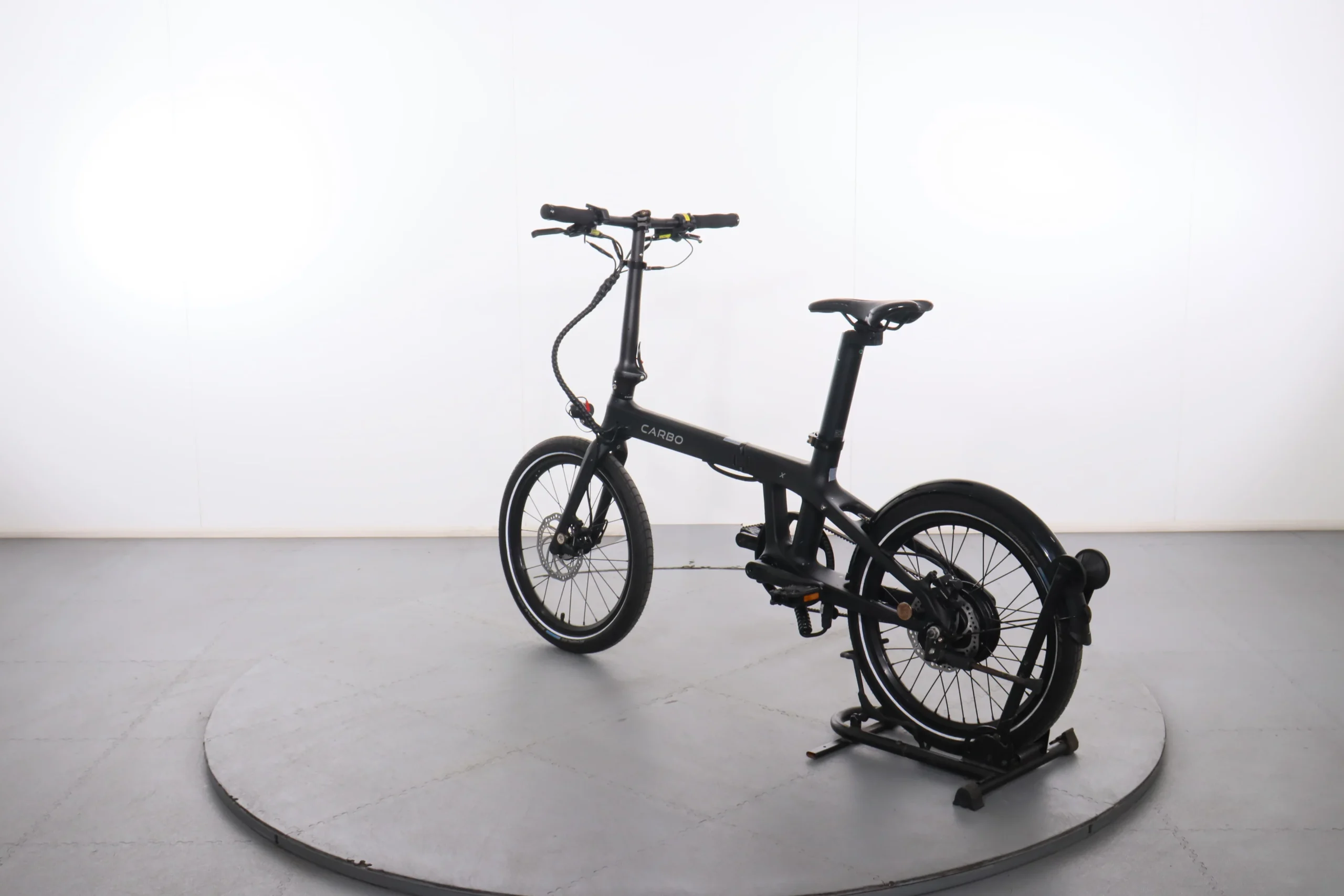
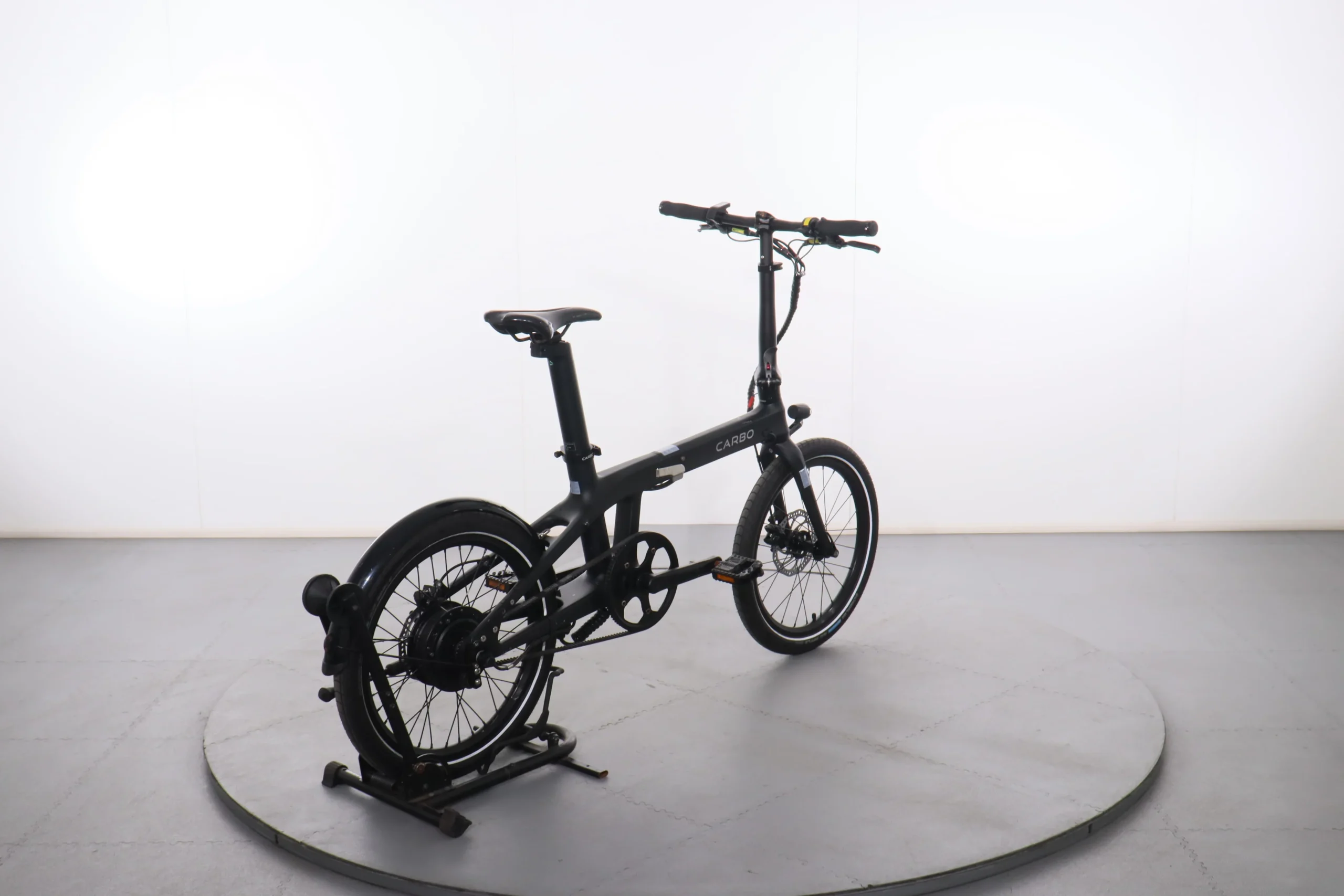
Experience the ultimate in lightweight mobility with the Carbo Model X, a sleek folding e-bike built for the modern urban commuter. Its minimalist carbon fiber frame, smooth pedal-assist, and intuitive folding design make it a perfect companion for navigating city streets or storing in small spaces. Whether you’re cruising to work or enjoying a weekend ride, the Model S delivers a seamless blend of performance, portability, and refined design.
Top features
Ultra-light electric bike
Excellent value
Hydraulic disc brakes for effortless, powerful and progressive brakes for complete safety
Specifications
General
Brand: Carbo
Model: Model X
Usage: Folding
Color: Black
Year: 2021
Mileage: 110 mi
Weight: 33 lb
Frame type: Open
Sizing
Manufacturer’s size: Unique (ideal for people between 4ft 10in and 6ft 5in)
Seat tube length: 30 cm
Electrical
Battery
Condition: Original
Battery capacity: 241 Wh
Number of cycles of battery charge: 3
Battery location: Seat post
Battery removable: Yes
UL certified: No. Unavailable for purchase in New York City. Learn more.
Motor
Brand: Bafang
Model: Bafang
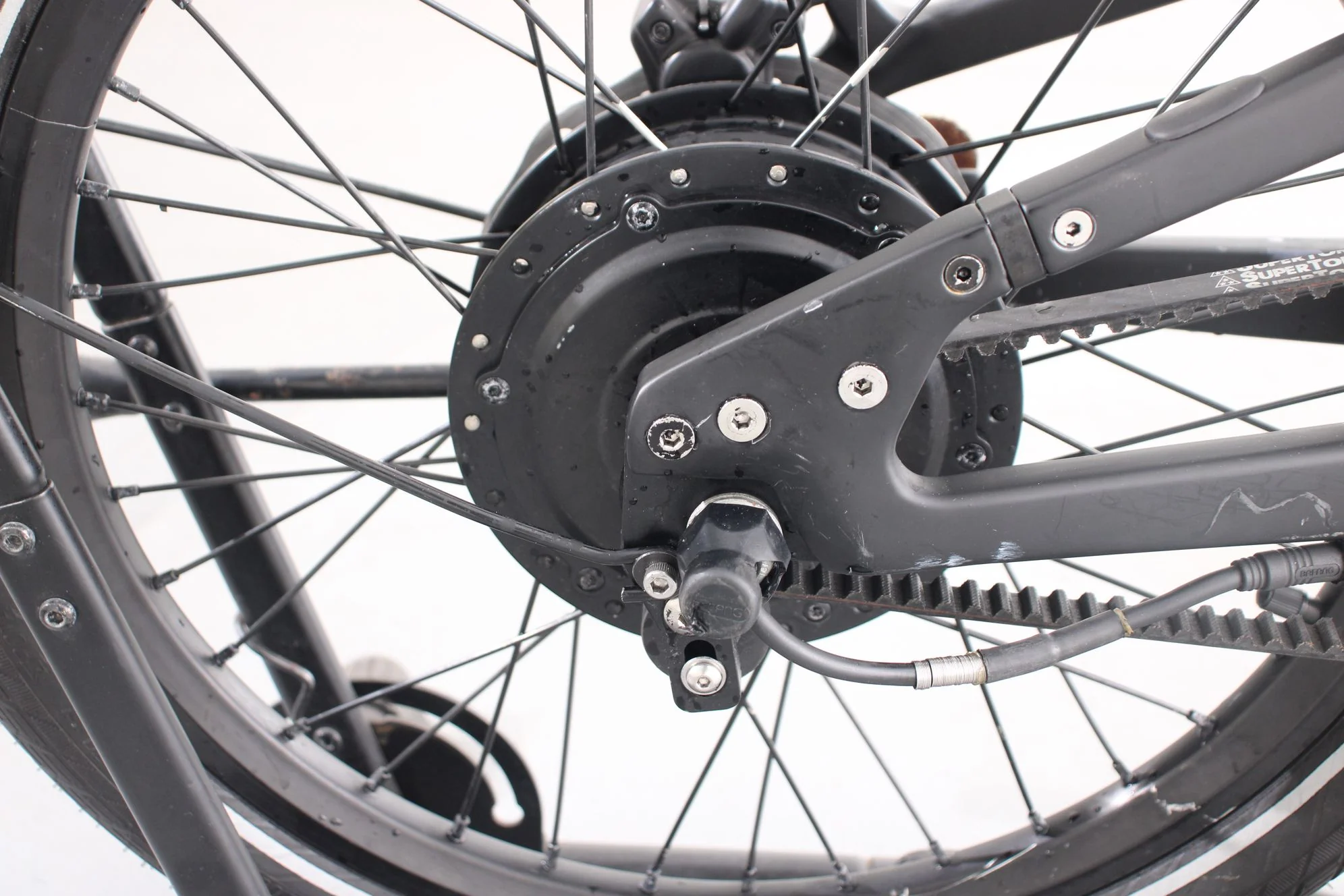
Engine location: Rear hub
Engine torque: 45 Nm
Engine power: 250 W
Assistance type: Pedal
Max speed: 20 mph
e-Bike class: Class 1
Mechanical
Frame & Suspensions
Frame material: Carbon
Drivetrain & Braking
Shifting: Derailleur
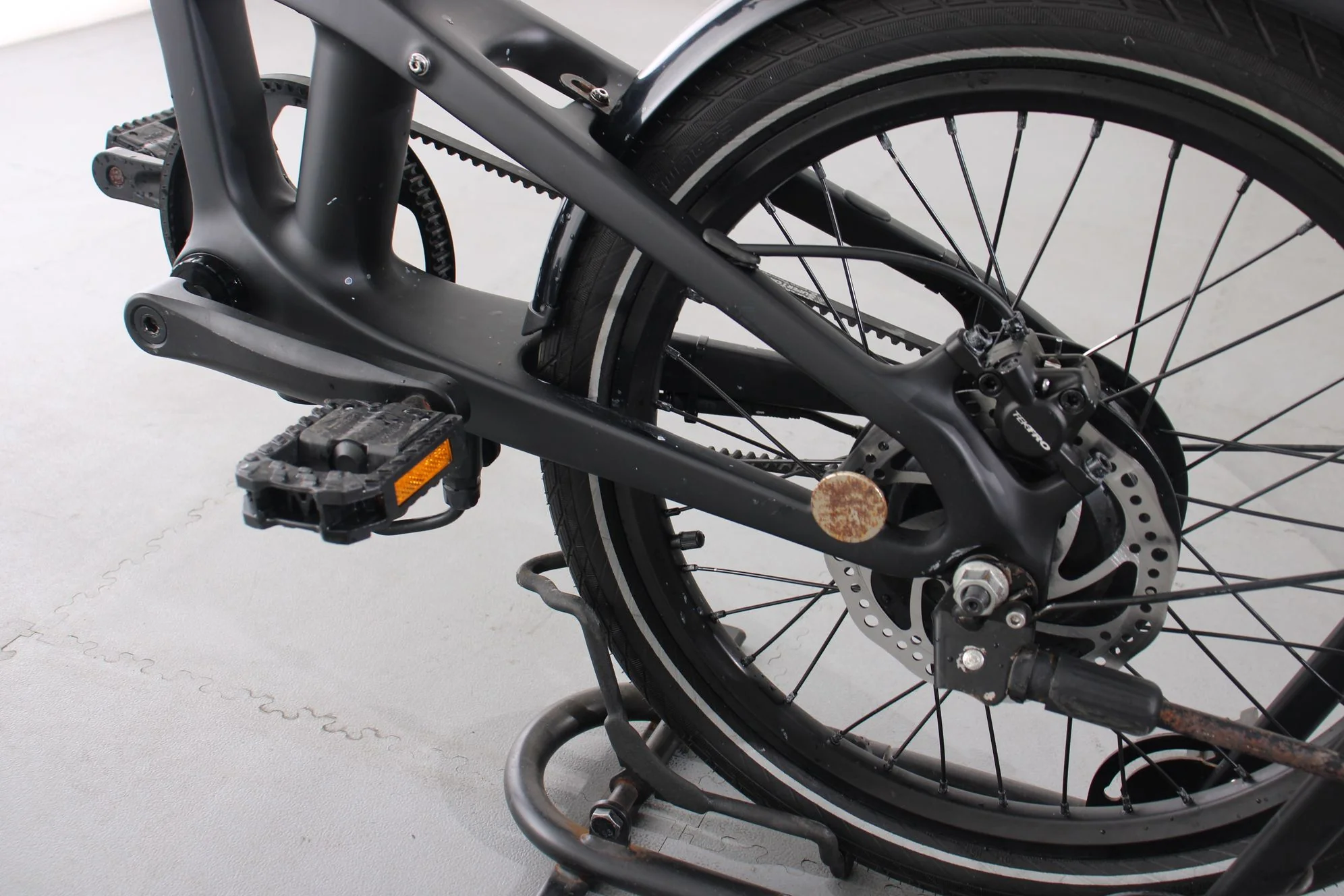
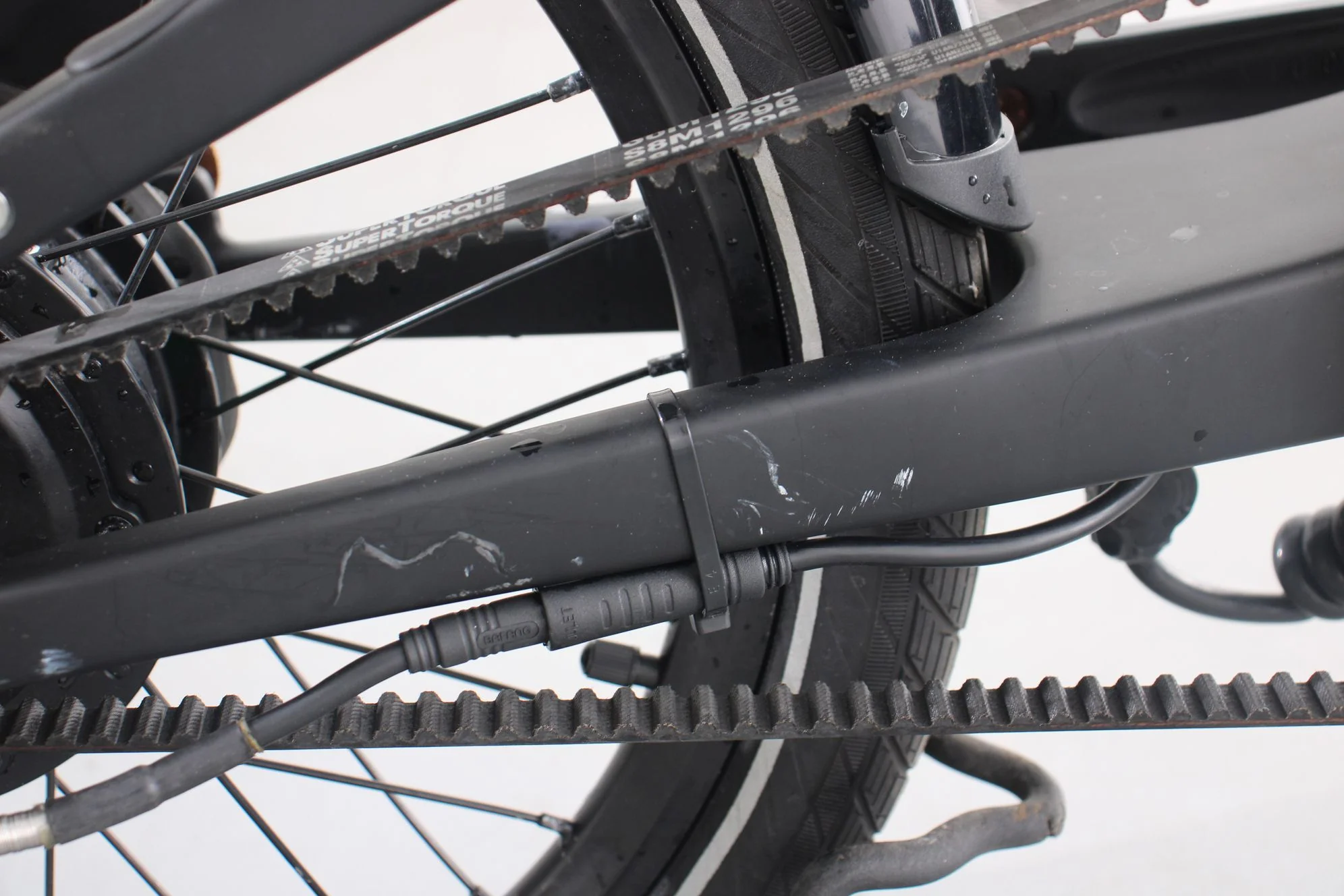
Transmission: Belt
Derailleur model: Single Speed N/A
Number of speeds: 1
Brakes: Disk | Hydraulic
Wheels & Tires
Wheels size: 20″
Tires: Schwalbe Balloon Big Apple (50-406 – 20 x 2.00)
Dropper post: No
Full inspection checklist
Mechanical
Electrical
Final checks
Inspected and tested in Brooklyn in October 2026.
| Mechanical | Fixed or replaced | Passed |
|---|---|---|
| Frame and steering | X | |
| 1.Frame shows no cracks, corrosion or deformation | X | |
| 2.Stem in very good condition and correctly tightened | X | |
| 3.Handlebars in very good condition and correctly tightened | X | |
| 4.Steering free of play | X | |
| 5.Handles in very good condition and correctly attached | X | |
| Brakes | X | |
| 6.Brake levers work and can be operated with one finger | X | |
| 7.Discs, pads and calipers are in very good condition, quiet and free from signs of oxidation | X | X |
| 8.Brake cables and sheaths in very good condition | X | |
| 9.Hydraulic brakes are sealed | X | |
| Wheels and tyres | X | |
| 10.Spokes are tight | X | |
| 11.Tires in very good condition | X | |
| 12.Tire pressure checked | X | |
| 13.Tires are concentric, installed in correct rotation direction and are identical front and rear | X | |
| 14.Wheels in very good condition, centered, not warped and free of play | X | |
| 15.Wheel hubs roll correctly | X | |
| 16.Rims show no dents or damage | X | |
| Drivetrain | X | |
| 17.Chain in very good condition, aligned and lubricated | X | |
| 18.Chainring and cassette in very good condition and greased | X | |
| 19.Gears shift correctly in both directions, without skipping, and control cables are lubricated | X | |
| 20.Pedals in very good condition | X | |
| Seat | X | |
| 21.Saddle in very good condition | X | |
| 22.Seatpost and clamp in very good condition, with no play | X | |
| Suspensions (if applicable) | X | |
| 23.Suspensions in very good condition and in perfect working order (tested in open and closed compression modes) | X | |
| 24.Dip tubes are free of oxidation | X | |
| 25.Suspension joints are free of leaks | X |
| Electrical | Fixed or replaced | Passed |
|---|---|---|
| Battery | X | |
| 1.Battery works and has at least 80% residual capacity | X | |
| 2.Battery is securely fastened and free from play | X | |
| 3.Charger present, functional and compatible with battery | X | |
| 4.Keys to remove battery are present and lock works (if applicable) | X | |
| Motor | X | |
| 5.Motor is functional and provides electrical assistance | X | |
| 6.Motor mounting screws are tight | X | |
| 7.Electronic connectors work | X | |
| 8.Pedaling sensors work | X | |
| 9.Speed sensor and spoke magnet correctly aligned | X | |
| Other components | X | |
| 10.Lights on front and rear work perfectly (if applicable) | X | |
| 11.Console lights up and displays motor and battery indications (if applicable) | X | |
| 12.Bike software is up to date | X |
| Final checks | Fixed or replaced | Passed |
|---|---|---|
| Accessories | X | |
| 1.Mudguards are secure and correctly positioned (if applicable) | X | |
| 2.Chain guard is secure and correctly positioned (if applicable) | X | |
| 3.Bike stand is functional and free of play (if applicable) | X | |
| Safety | X | |
| 4.Frame lock works and has a key (if applicable) | X | |
| 5.Bell is functional (if applicable) | X | |
| Cleanliness | X | |
| 6.Bike was cleaned | X | |
| 7.No stickers or residues of tape or glue on the bike | X | |
| Test ride | X | |
| 8.Test ride performed in real conditions | X |
BALONEY – 14 Day Test Ride Policy
Easy 14-day returns if the bike isn’t the right fit. No explanation needed.
Hassle-free process: we arrange pickup and issue a refund (excluding the shipping fees & a $200 restocking fee) after inspection
Terms of sale
Upway Limited Product Warranty (USA)
Upway USA (“Upway,” “we,” “us,” or “our”) warrants to the original purchaser only that any product identified below as a “Covered Product” that you purchased from Upway or one of our authorized distributors or resellers (each, an “Authorized Reseller”) will be free from defects in materials and workmanship under normal use for a period of twelve (12) months from the date of purchase by the original purchaser (“Warranty Period”), as documented by valid proof of purchase. This limited product warranty (“Limited Product Warranty”) is subject to certain exclusions and limitations, as set forth herein.
Upway’s sole obligations under this Limited Product Warranty are as specified in the *What are your remedies under this Limited Product Warranty?*, below.
1. What is covered by this Limited Product Warranty?
“Covered Products” are any light electric vehicles refurbished by Upway and are sold via our Services or by one of our Authorized Resellers. Covered Products do not include any new third party products sold via the Services (e.g., helmets and other accessories).
This Limited Warranty applies only against defects in Covered Products that are discovered within the applicable Warranty Period and only so long as the Covered Product remains in the possession of the original purchaser, or, for a gifted Covered Product, the original possessor of that Covered Product.
This Limited Product Warranty is valid only in the jurisdictions where the Covered Product is sold by Upway itself or by an Authorized Reseller.
2. How long am I covered by this Limited Product Warranty?
The Warranty Period for each Covered Product is twelve (12) months from the date of retail purchase by the original purchaser, as documented by a valid proof of purchase—e.g., receipt or invoice.
3. What are my remedies under this Limited Product Warranty?
If a defect in the Covered Product arises and a valid claim is received by Upway within the Warranty Period, Upway will, at its option and to the extent permitted by law, either (a) repair the defective Covered Product at no charge, using new or refurbished replacement parts, or (b) exchange the defective Covered Product with a new or refurbished Covered Product or a product that is reasonably equivalent to the Covered Product. If Upway, in its sole discretion, determines it is not reasonable to replace the defective Covered Product, Upway may refund to you the purchase price paid for the Covered Product. In the event of a defect, to the extent permitted by law, these are your sole and exclusive remedies. You may be responsible for payment of shipping and handling charges for the delivery of a repaired or replacement Covered Product, except where prohibited by applicable law. Any replacement of a defective Covered Product or parts under this Limited Product Warranty will be warranted for the remainder of the original Warranty Period of the returned Covered Product, or for any additional period of time that may be applicable in your jurisdiction.
4. How do I make a claim or obtain warranty service under this Limited Product Warranty?
a. If you believe you need warranty service under this Limited Product Warranty, please contact helpdesk@upway.shop. To obtain warranty service, you first will need to obtain a Return Merchandise Authorization (RMA). To request an RMA, you must contact our customer service team via helpdesk@upway.shop. In your request, you must include proof of purchase details the bike Upway ID for the Covered Product, a brief explanation for why you are requesting a return, and a description of the steps you have taken to troubleshoot the problem.
b. Once you receive an RMA, you will need to deliver the defective Covered Product, in either its original packaging or packaging providing an equal degree of protection, together with proof of purchase indicating the date purchased, to the address specified by Upway. By sending the Covered Product, you hereby acknowledge that ownership of the Covered Product is transferred to us upon Upway’s receipt of the defective Covered Product. If Upway determines that the claim is justified based on this Limited Product Warranty, Upway shall bear the cost of shipping the repaired or replacement Covered Product to you. Any Covered Product returned to Upway without a valid warranty claim or without a RMA may be rejected, returned at your cost (subject to prepayment), or disposed of in Upway’s sole discretion with no further liability or obligation to you.
c. For specific instructions on how to obtain warranty service on your Covered Product, visit the Site at [How Do I File a Warranty Claim?].
d. Claims must be made within the Warranty Period.
5. What is not covered by this Limited Product Warranty?
a. This Limited Product Warranty applies only to Covered Products (i.e., light electric vehicles refurbished by Upway that are sold via the Services or by one of our Authorized Resellers). The Limited Product Warranty does not apply to, and the term “Covered Product” will not include, any consumable parts–other than batteries–that are included in or sold as part of a Covered Product (e.g., brake pads, tires, tubes, cables). This Limited Product Warranty does not apply to any defects or parts requiring replacement due to ordinary wear and tear, corrosion, rust or stains, scratches, dents on the casing or paintwork of the Covered Product or any damage to the Covered Product caused by any of the following:
-
Improper assembly of the Covered Product or components thereof or improper installation of components, parts or accessories, including the installation of components, parts or accessories not originally intended for or compatible with the Covered Product.
-
Acts of God (e.g., lightning, flooding, tornado), power surges or other accident, abuse, crash, neglect, or other abnormal, excessive, or improper use of the Covered Product (i.e., use of the Covered Product outside the permitted or intended uses described by us in the applicable product specifications and usage manuals).
-
Improper repair or maintenance, including failure to perform maintenance at appropriate intervals in accordance with written instructions provided with the Covered Product.
-
Improper alteration or installation of components, parts or accessories not originally intended for or compatible with the Covered Product.
-
And with respect to batteries included in a Covered Product:
- Temporary decrease in power or distance that can be traveled on a single battery charge due to operating conditions such as ambient temperatures, load, inclines, frequent starting and stopping, and normal system-protection functions, as well as temperature-related performance of the battery charger.
- Normal deterioration of the battery, including the gradual decrease of battery capacity over the Warranty Period as long as the battery capacity is still 50% or more of the initial capacity before the end of the Warranty Period and the total number of battery charging cycles is 350 or less.
For the avoidance of doubt, recovery and reinstallation of software programs and user data are not covered under this Limited Product Warranty. It is your responsibility to backup any data, software, or other materials you may have stored or preserved on the Covered Product. It is likely that such data, software, or other materials will be lost or reformatted during the performance of any warranty service, and Upway will not be responsible for any such damage or loss.
6. Are there any other limitations with respect to this Limited Product Warranty?
a. IMPLIED WARRANTIES AND CONDITIONS. UPWAY DOES NOT WARRANT THAT THE OPERATIONS OF THE COVERED PRODUCT WILL BE UNINTERRUPTED OR ERROR-FREE. EXCEPT TO THE EXTENT PROHIBITED BY APPLICABLE LAW, ALL IMPLIED WARRANTIES AND CONDITIONS (INCLUDING WARRANTIES AND CONDITIONS OF MERCHANTABILITY AND FITNESS FOR A PARTICULAR PURPOSE) WILL BE LIMITED IN DURATION TO THE DURATION OF THIS LIMITED PRODUCT WARRANTY. SOME STATES DO NOT ALLOW LIMITATIONS ON THE DURATION OF AN IMPLIED WARRANTY, SO THE ABOVE LIMITATION MAY NOT APPLY TO YOU. THIS LIMITED PRODUCT WARRANTY GIVES YOU SPECIFIC LEGAL RIGHTS, AND YOU MAY ALSO HAVE OTHER RIGHTS THAT VARY FROM STATE TO STATE.
b. LIMITATION OF DAMAGES. EXCEPT TO THE EXTENT PROHIBITED BY APPLICABLE LAW, UPWAY SHALL NOT BE LIABLE FOR ANY INCIDENTAL, INDIRECT, SPECIAL, OR CONSEQUENTIAL DAMAGES, OR ANY LOSS OF PROFITS, REVENUE OR DATA, RESULTING FROM ANY BREACH OF AN EXPRESS OR IMPLIED WARRANTY OR CONDITION, OR UNDER ANY OTHER LEGAL THEORY, EVEN IF UPWAY HAS BEEN ADVISED OF THE POSSIBILITY OF SUCH DAMAGES AND REGARDLESS OF THE FORM OF ACTION WHETHER IN CONTRACT, TORT (INCLUDING NEGLIGENCE) OR ANY OTHER LEGAL OR EQUITABLE THEORY. Some jurisdictions do not allow the exclusion or limitation of special, indirect, incidental or consequential damages, so the above limitation or exclusion may not apply to you.
7. What else do I need to know about this Limited Product Warranty?
- No employee of Upway or any Authorized Reseller is authorized to make any modification, extension, or addition to this Limited Product Warranty. If any term of this Limited Product Warranty is held to be illegal or unenforceable, the legality or enforceability of the remaining terms will not be affected or impaired.
- This Limited Product Warranty is and will be governed by the laws of New York, USA, without giving effect to any conflict of laws principles that may require the application of the law of another jurisdiction.
- Any disputes between you and Upway related to this Limited Product Warranty or a Covered Product will be governed by the then-current dispute resolution procedures in Upway’s Terms of Service.
- If you have any questions about this Limited Product Warranty, please contact helpdesk@upway.shop .
Steps to install wrap
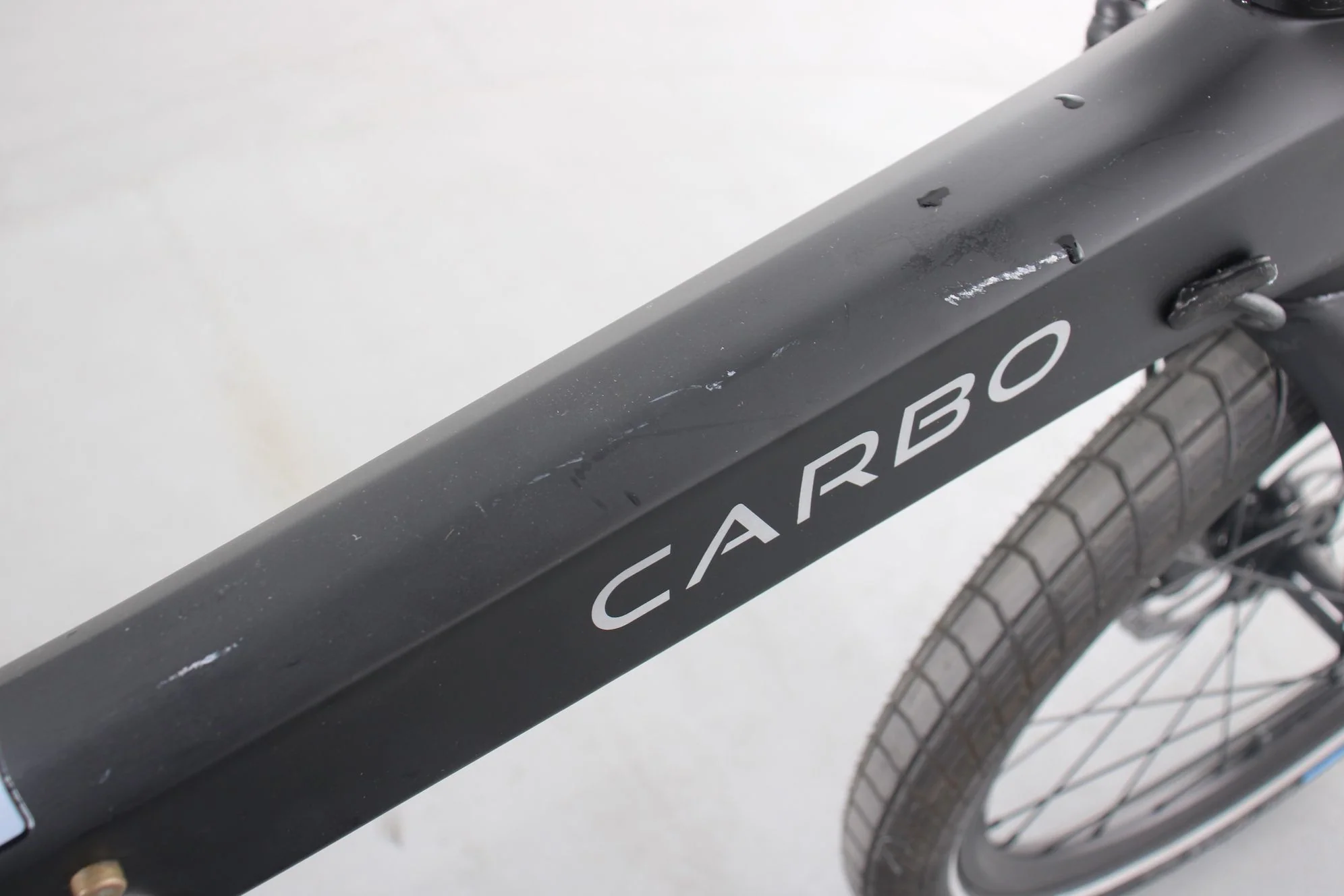
Yes. For your CARBO, I’d install the 3M matte dark-grey vinyl in separate, unstretched panels, rather than attempt a seamless full-frame wrap. That makes it easier to hide the branding, protect the finish, and leave the folding hardware accessible.
Important difference from some clear protection films: 3M 1080/2080 color-wrap vinyl installs dry—no soapy water underneath it.[3m]
1. Gather your supplies
• Your vinyl.
• Felt-edged vinyl squeegee.
• Clean microfiber cloths.
• Mild soap and water.
• 70% isopropyl alcohol, subject to compatibility with the bike’s finish.
• Scissors.
• Paper for templates.
• Low-tack masking tape.
• A clean cutting mat or scrap board.
For this first installation, plan pieces that don’t require heat or significant stretching. You don’t need to start by buying a heat gun.
Check the backing or packaging to establish whether you actually received 1080 or 2080; the seller’s “now 2080” title alone doesn’t identify the material in your hands.
2. Work indoors at room temperature
Let the bike and film reach room temperature before starting. Aim for about 65–75°F, in a clean, well-lit room. That matches 3M’s published application range for its current 2080 bulletin.[3m]
Turn the bike off and remove the seatpost battery according to CARBO’s instructions. Keep cleaning liquids away from electrical connectors.
Don’t suspend or clamp the carbon frame just to make wrapping easier; position it securely without crushing a tube.
3. Inspect and photograph the areas you’ll cover
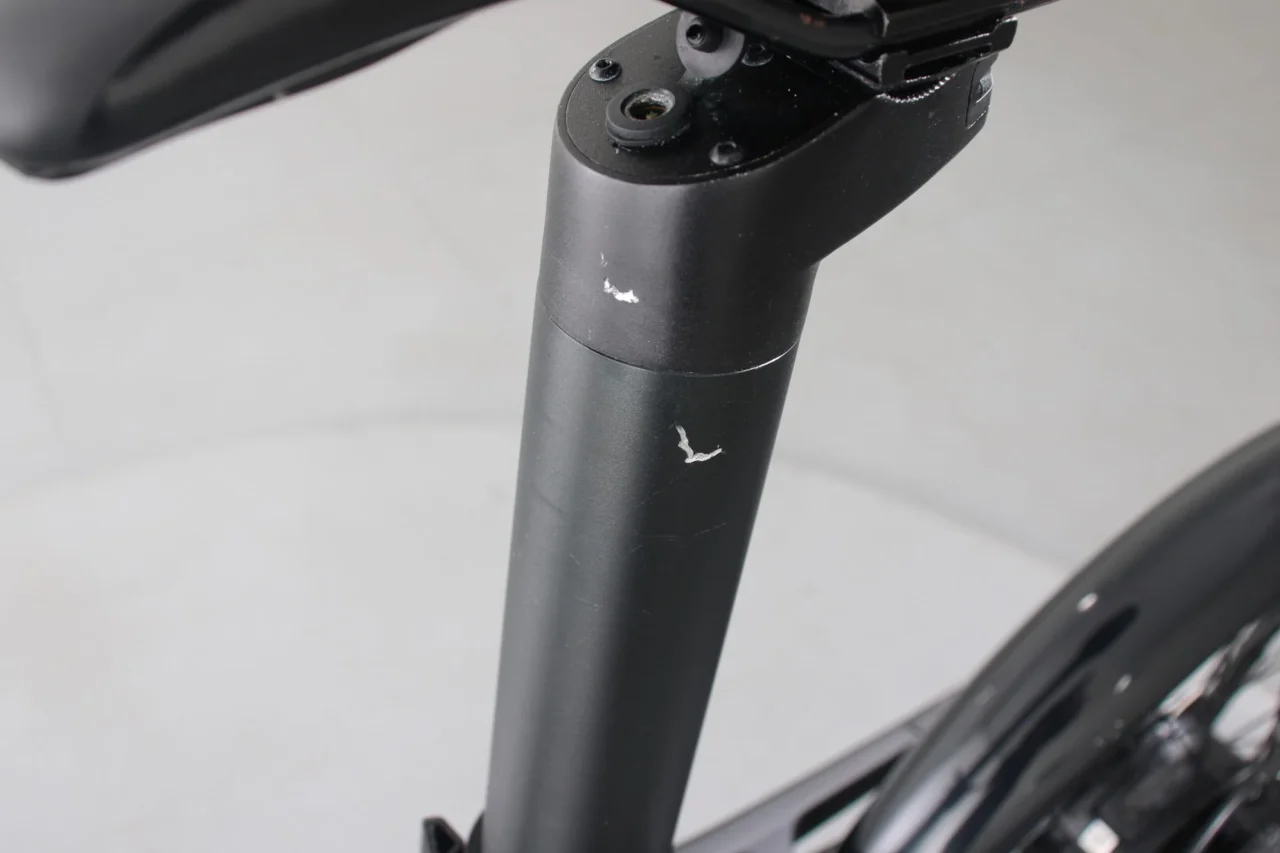
Take clear photos of the existing scuffs, including the rear-frame area you showed earlier.
If anything looks like a crack, exposed fibers, or a deeper gouge rather than a finish scuff, leave that area uncovered until it has been assessed. Vinyl is not a repair.
Do not sand the frame or try to scrape the logos off.
4. Clean, then let it dry completely
- Wash the intended areas with mild soap and water.
- Remove the soap with a clean damp cloth.
- Dry thoroughly, including around seams and cable guides.
- On a small inconspicuous spot, test whether the finish tolerates the final cleaning wipe.
- If compatible, lightly wipe the application surface with 70% IPA and a clean cloth, then wipe dry.
3M specifies a final IPA cleaning step and a completely dry surface. Its instructions are for compatible vehicle finishes; that is not blanket approval for every bicycle coating or damaged decal. Avoid stronger solvents or automotive degreasers unless CARBO approves them.[3m +1]
5. Make paper templates first
For the first session, choose one easy area—such as a logo on a relatively straight section of the main tube.
• Make the paper piece cover the intended area.
• Stop short of joints and hardware.
• Round the corners.
• Check it with the bike both unfolded and folded.
• Transfer that shape to the vinyl backing.
Cut the vinyl on your cutting mat, not on the bike.
For a full circumference piece, put the seam on the underside or another inconspicuous face. Check that the template reaches around without needing to be pulled tight.
6. Keep the film direction consistent
Before separating your pieces, mark a direction arrow on each backing sheet. Orient matching panels consistently.
3M notes that directional finishes can look different if adjacent pieces are installed in different orientations. Following one direction helps avoid an unintended patchwork appearance.[3m]
7. Peel back only a small section of the liner
- Lay the piece against the frame with its backing still on.
- Check its position.
- Peel back roughly an inch or two of liner at one end.
- Lightly tack that exposed section into place.
Avoid touching the adhesive. Don’t firmly press the entire patch down immediately: 3M’s adhesive is designed to allow repositioning before pressure establishes the bond.[3m]
8. Squeegee gradually
Slowly pull away more backing while smoothing the film with the felt-edged squeegee:
• Work from the middle toward an open edge.
• Use short, overlapping strokes.
• Apply firm, controlled pressure—not scraping force.
• Let the material lie against the tube without pulling it tight.
The film has air-release channels to help air escape during application.[3m]
If a wrinkle develops, stop. Lift that section gently and lay it again rather than trying to crush the wrinkle flat.
9. Use another piece when the shape gets difficult
Where a tube curves sharply, widens, or meets another tube, end the panel neatly and use a separate piece.
For your bike, a clean seam is preferable to a stretched patch that fights to lift later. Don’t bridge a hollow or recess with unsupported film.
This is especially important because 3M’s automotive process calls for high-temperature post-heating of stretched areas. Those temperatures are not automatically approved for CARBO’s carbon frame, finish, adhesives, or nearby electrical parts. I would not apply that automotive heating procedure to the bike without CARBO’s approval.[3m]
10. Finish the edges and check the fold
Press the perimeter carefully with the felt edge or a clean cloth-covered fingertip.
Then fold and unfold the bike slowly, checking that the vinyl:
• Does not cross the folding joint.
• Cannot catch in a latch.
• Does not obstruct a cable or connector.
• Does not cover a clamp’s gripping surface.
• Leaves the serial number, safety labels, and seatpost insertion marks readable.
If an edge keeps lifting, don’t keep stretching or heating it. Recut the piece so it sits without tension.
11. Let it settle indoors
Keep it indoors above 60°F for at least 12 hours before exposing it to cold or wet weather. That follows 3M’s guidance for strengthening the bond after application.[3m]
Recheck the edges the next day.
My suggested first session
Do just one logo panel first. Look at it in daylight, test the fold, and leave it overnight. If the color, finish, and adhesion look good, continue with the other areas.
One final expectation: this is thin cosmetic wrap with some sacrificial scuff protection—not impact padding. And don’t polish or wax the matte finish; 3M recommends gentle cleaning without wax additives.[3m +1]
Round 1
https://cheetahwrap.com/products/60-satin-stormy-gray?variant=50131708608798&country=US¤cy=USD
For your two goals, I’d use opaque vinyl to hide the branding, plus bicycle paint-protection film on the areas that get knocked or rubbed—rather than trying to do a seamless automotive-style wrap over the entire CARBO.
That separates the jobs: the colored vinyl changes its appearance; the protective film takes the everyday abrasion. Bicycle protection films are designed for paint protection, including cable rub and debris—not to make a carbon frame crash-proof.[ridewrap +1]
The approach I’d take on yours
CARBO logos and other prominent branding
Simple panels of satin/matte black automotive wrap vinyl
Underside of the main frame tube
Bicycle protective film
Places that touch when folded
Protective patches, positioned after checking how it folds
Cable-rub and heel-rub spots
Small protective patches
Hinges, latches, clamps, and moving interfaces
Leave unobstructed
Serial number and safety labels
Area
Leave readable
Treatment
That’s a practical layout proposal, not a CARBO-specific precut kit. Clear protective patches are commonly used to protect carbon-bike finishes from rubbing and debris.[roadbikerider]
I’d start with black logo-covering panels and a few protection patches. You can always add more; you don’t have to gift-wrap the entire bicycle on day one.
How to apply it without turning it into a project from hell
- Inspect and photograph the bare frame first. Don’t cover an unexplained chip, crack, or suspicious area before having it checked.
- Wash gently and dry thoroughly. Then use the film maker’s recommended surface-preparation cleaner, checking compatibility with the bike’s finish.
- Make paper templates. Cut the film off the bike, with rounded corners. Don’t run a knife against the carbon frame.
- Use several manageable pieces. Leave small gaps at joints and around hardware instead of wrapping across them.
- Follow that product’s installation method. Bicycle PPF may use a wet/slip-solution process; don’t assume it installs like automotive color vinyl. RideWrap, for example, specifies wet application and squeegeeing the solution out. Keep installation liquid away from the battery and electrical connections.[ridewrap]
- Avoid aggressive heat. Start with pieces that fit without stretching. RideWrap calls for only gentle heat when necessary and warns against overheating during installation or removal.[ridewrap +1]
For a used finish, I’d also test a small inconspicuous patch before committing. Removable adhesive isn’t a promise that every old decal or damaged clearcoat will survive removal untouched.
What I’d buy—and skip
Buy:
• A small sheet of reputable, removable automotive color-wrap vinyl for the logos.
• A universal bicycle protection-film kit or sheet material.
• A small squeegee, microfiber cloth, and scissors.
Skip:
• Permanent adhesive films or duct tape.
• A complicated full-frame wrap that requires lots of heat and stretching.
• Covering the seatpost’s sliding/clamping area, folding latch, or any drainage openings.
One expectation to set: this should help with scuffs, finish chips, and routine rubbing. It cannot reliably prevent structural carbon damage from a hard impact.[roadbikerider +1]
My vote is satin black over the branding, with discreet clear protection at contact points: understated, serviceable, and much easier to inspect and replace than a full camouflage wrap. Hiding the logo can make it less conspicuously branded, but I’d treat that as appearance—not an extra lock.
Updates
- The Puncture-Proof Pavement Cushions (Tires & Liners)
Since your model has a single-speed belt drive, you want to build a wheel setup that you will never have to take apart on a dirty city sidewalk to fix a flat.
- The Balloon Tires: Buy a pair of *Schwalbe Big Apple 20×2.00 Tires*. These act as a natural air suspension system for rigid frames. You can run them at a lower pressure (around 30–35 PSI) so they swallow up the rough SoMa asphalt, potholes, and utility tracks like a plush cushion. [1, 2]
- The Foam Armor: Pair the tires with *Tannus Armour 20" x 1.95"-2.5" Inserts*. They slide easily right between your tire and your inner tube, adding 15mm of solid multi-cell foam directly underneath your tread. This eliminates 90% of flat risks from road glass, nails, and street debris while providing run-flat protection if you ever lose air. [1, 2, 3]
- Local Concierge Tip: Take the bike, the Schwalbe tires, and the Tannus inserts straight to *Warm Planet Bikes* (near the Caltrain station) or *Mission Bicycle* on Valencia. Pay them to install the inserts properly. Because rear hub motor wheels with belt drives require perfect belt tensioning upon reassembly, letting a mechanic handle it saves you a massive headache. [1]
- The 60-Second Coffee Lock
Since this bike lives strictly under your desk or next to your couch, your lock is only for quick, visual errands (like grabbing a burrito or picking up an prescription while watching the window).
-
ABUS USA
Bike Folding Locks
Ultra-lightweight at just 440 g, the BORDOTM Lite 6055 Folding Lock offers strong security without the bulk. Perfect for cyclists …
The Compact Guard: Get the Abus Bordo Lite 6055K Folding Lock. It is ultra-lightweight at just 440 grams and folds down into a tiny steel brick roughly the size of a smartphone. It slides completely out of sight into a backpack, coat, or tote bag, giving you instantaneous opportunistic protection without dragging around a massive 15 lb motorcycle chain. [1, 2]
- The Front Mud Blocker (Fenders)
Your Upway listing came with a rear fender, but you need a front guard to keep dirty puddle spray off your shoes and pant legs on Market Street.
- The Guard: Look at the SKS Bluemels Basic 20-Inch Fender Set. They feature an aluminum-plastic sandwich construction that is completely rustproof and rigid. You can just bolt the front matching mudguard directly onto your front carbon fork eyelets. [1]
- The DIY Stealth Wrap
Covering up the premium carbon weave and that big silver "CARBO" branding is the ultimate security camouflage for city riding.
- The Material: Buy a small 5ft x 1ft roll of Avery Dennison SW900 Matte Matt Black Vinyl Wrap or 3M 2080 Matte Black Film.
- How to Apply It: Clean the frame tube thoroughly with isopropyl alcohol. Cut the vinyl into simple continuous rows to mirror the straight boxy lines of the frame. Use a basic hair dryer or a heat gun on low to make the vinyl flexible, then smooth it down with a plastic squeegee or a credit card. It will completely mask the luxury e-bike logos, protect the carbon clear coat from future desk-bumping scratches, and make it look like a cheap, generic, anonymous commuter bike to any wandering eyes.
Mileage
How is the mileage of an electric bike calculated?
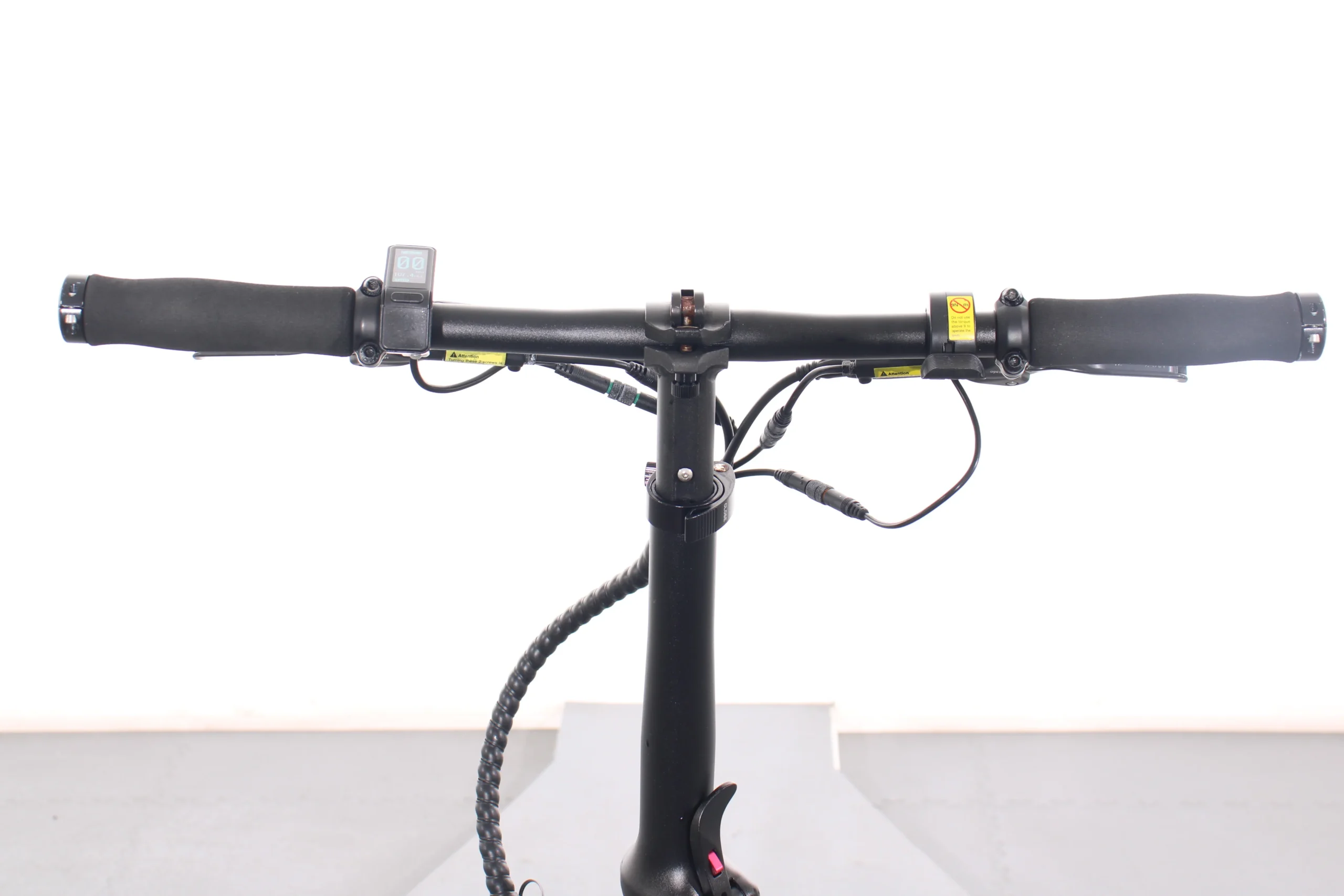
You can typically read the lifetime mileage of a bike on its computer system’s odometer, exactly akin to cars. You can usually view this data if it is on the display of the bike by zooming in on the photo of the bike’s handlebars (the 7th photo) on a specific bike’s webpage on our site.
When the electric bike doesn’t have a computer display, we can obtain this information by performing a diagnostic exam with certain software.
Why do some bikes have very low mileage?
The bikes sold by Upway come from both consumer and professional sellers. Many of our bikes were originally overstock from local bike shops; in other cases, the previous owner simply did not use the bike much. Regardless, all bikes at Upway are inspected and reconditioned by our mechanics to the highest degree.
When is a bike’s mileage considered high?
The natural reflex is to compare an electric bike to a car, whose condition is easily summed up by its total mileage. However, this comparison is erroneous, as the wear and tear of an electric bike is not directly linked to its use.
The most important component of an electric bike is the battery: in our battery guide, we explain why an electric bike can reach 20,000 miles without any significant deterioration in its range, provided it has been properly maintained.
Thus, even a bike with several hundred miles on its odemeter is still young (given proper maintenance of its battery, particularly in the winter)!
💡 Did you know? At Upway, all our bikes pass through the hands of our professional mechanics, who carry out a full mechanical and electrical diagnosis. We replace batteries with insufficient capacity (less than 80% of the original capacity) as well as all components susceptible to wear and tear that are not in optimal condition (tires, chain, cables…).
All our bikes also come with a one-year warranty on frame, motor, battery and electrical components.
Was this article helpful?
Electric motor
In order to figure out what motor will best suit your needs, there are two questions you need to ask yourself:
- The position of the motor: it can be placed either in the crankset, or in one of the bike’s wheels.
- The amount of torque needed: this will depend on the terrain/incline you plan to ride on and the loads (just yourself, your kids, your groceries, etc) you plan to carry.
Motor Position
- Hub Motors (typically located in the rear wheel, but not always): they directly spin the wheel, independent of the force you apply to the pedals & chainring. They are generally found on bikes for smaller budgets. The motor is less expensive, more discreet, lighter (which is handy if you need to lift it frequently) and suitable for mostly flat roads. On the other hand, assistance is often described as less natural. Wear and tear on the cassette, chain, and derailleur is also typically faster than if the motor were located in the mid-drive.
- Mid-Drive Motor: most of of Upway’s e-Bikes feature a mid-drive motor. Mid-drive motors are located where the pedals attach to the frame: they apply power to the chain-ring (the part that you apply force to when you pedal). This type of motor is generally more premium and provides assistance proportional to the power of your pedaling. This can make the bike a bit heavier, but central position of mid-drive motors improves the bike’s balance and stability. Finally, note that it is easier to change a rear wheel flat because it doesn’t have a motor attached to it.
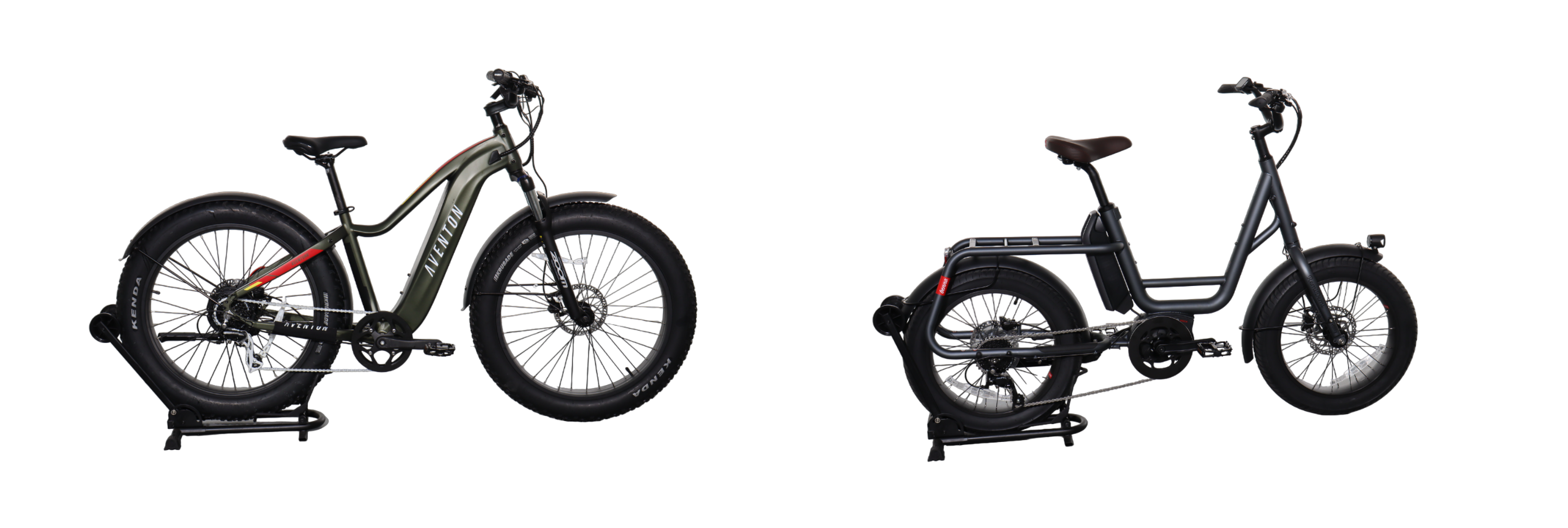 Left: Rear-Hub Motor on an Aventon Aventure 1 — Right: Mid-Drive Bosch Performance Line Motor on a Benno RemiDemi 9D
To find out more about motors, read our article on how electric motors work.
Speed and e-Bike classes
In the United States, e-bikes are commonly categorized into three classes:
- Class 1: pedal-assist only, with no throttle, and have a maximum assisted speed of 20 mph.
- Class 2: also have a maximum speed of 20 mph, but are throttle-assisted.
- Class 3: pedal-assist only, with no throttle, and a maximum assisted speed of 28 mph.
ℹ️ You can apply filters to our catalog to narrow down your search based on the maximum speed (20 or 28 mph) and the assistance type (throttle and pedal, or throttle only).
Local regulations may restrict the usage of certain classes of e-bikes in specific scenarios. For example, some shared multi-use trails might prohibit Class 2 or Class 3 bikes.
Assistance type: throttle vs. pedal-assist
Certain e-bikes are equipped with a throttle mechanism, typically operated by a thumb trigger or twist, enabling the motor to provide power independently of pedaling, thus categorizing them as Class 2 e-bikes. These throttle-enabled e-bikes also incorporate pedal-assist functionality, meaning the motor engages in response to pedaling, but with the added option of throttle activation.
Throttle mechanisms are predominantly found in e-bikes featuring Chinese motors and are typically absent in higher-end models. They offer practical advantages for commuting, facilitating stable travel at very low speeds, such as on sidewalks, and effortless acceleration from traffic lights and stop signs.
ℹ️ You can also apply a filter to our catalog to narrow down your search based on the type of electrical assistance you need.
Motor Torque
Torque describes a motor’s propulsive force: the higher the torque, the more it will help you accelerate uphill. If your trips involve uneven terrain, or if you regularly carry heavy loads (child seat, trailer…), you’ll need to choose an electric bike with sufficient motor torque.
Torque is expressed in newton meters (Nm) and is indicated on each bike’s product page. As a guide, we recommend different amounts of torque depending on the slope of the terrain you’ll ride on, as seen below:
| Type of terrain | Flat | Hilly | Mountainous |
|---|---|---|---|
| Suggested minimum torque | ≥ 20 Nm | ≥ 50 Nm | ≥ 70 Nm |
Do not compare the torque between mid-drive and hub motors. For a similar torque value, a mid-drive motor will be in reality more “powerful”: the applied torque available is higher because the torque can be scaled using your gears. As a result, mid-drive motors are typically preferred if you expect a lot of hill-climbing.
There are two important exceptions:
- If you regularly carry a heavy load (children, trailer, etc.), we advise you to select a higher category. For example, select a bike with at least 50 Nm if your route is flat, and 70 Nm if your route is hilly if you plan to bring your kids along on all your rides.
- Conversely, for lighter bikes (under 45 lb), you can get away with a weaker torque.
Motor Brands
Other considerations may come into play in your choice: for example, you may prefer a motor from a well-known, reliable brand (such as Bosch, Specialized, Bafang or Brose). This will facilitate access to spare parts.
Battery and range
The range of your battery is determined by its battery capacity (measured in watt hours, Wh). The higher the capacity, the longer the distance covered on a single charge.
How do I choose the right battery capacity for my needs?
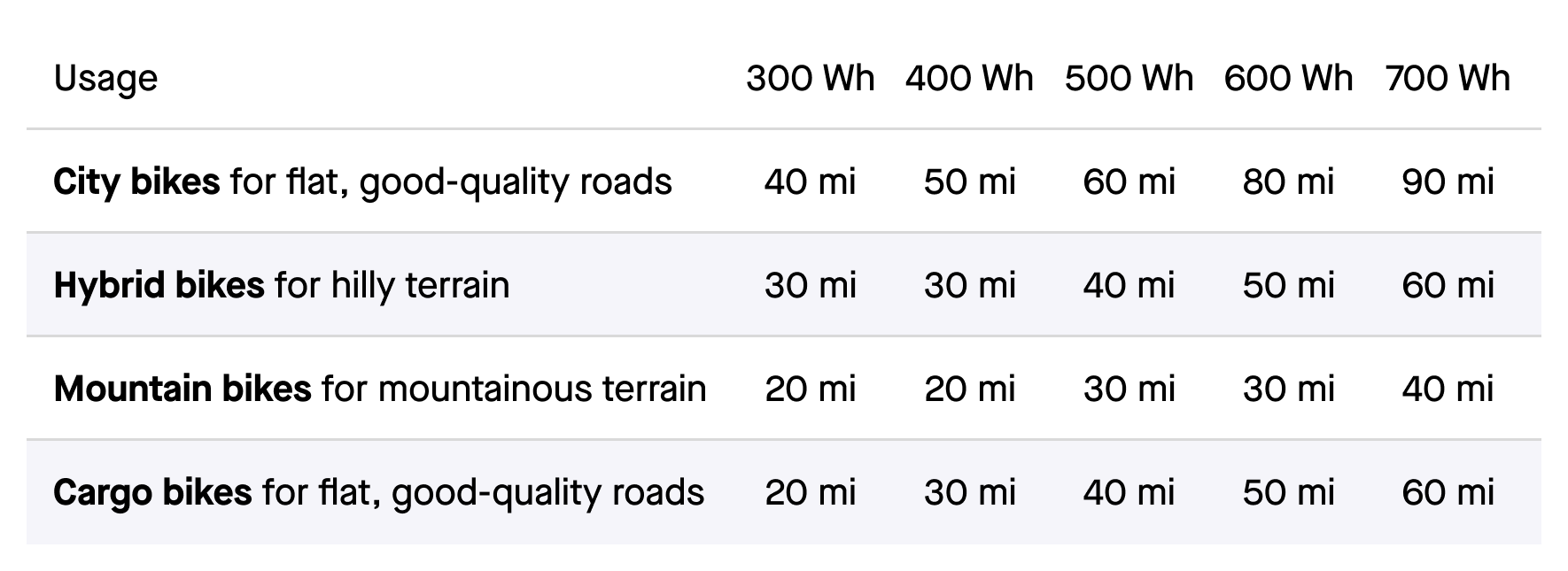
Range – i.e. the number of miles you can cover on a charged battery – depends primarily on the battery’s original capacity. However, other factors can have a major influence on range: the level of electric assistance used, the road surface and its gradient, weather conditions, and your weight.
For reference, the table below includes the average range per battery capacity for different uses. This table assumes a rider weight of 165lb (not including the weight of the electric bike) and usage of an intermediate electric assistance mode:
Is it risky to buy a reconditioned bike with its original battery?
Not at all! The lifespan of a battery reduces in a nonlinear fashion: it can complete around 500 charge cycles before starting to lose significant and increasingly large amounts of range. Counting an average of 40 miles per charge cycle, this means that an electric bike can about 20,000 miles without any problem, while maintaining a very good range. The bikes we sell at Upway are still in the early stages of their lives!
Unlike most places where you buy used e-bikes (eBay, Facebook marketplace, etc), Upway’s bikes are carefully tuned by our expert mechanics in the following ways:
- A diagnosis of the bike’s battery, whenever possible. We issue a service report containing the number of charge cycles already completed: this data is displayed on the bike’s page.
- After 1,000 miles or 5 years, an additional capacity test is performed. If we judge the remaining capacity to be insufficient (i.e. less than 80% of its original value), the battery is reconditioned or replaced.
In practice, it is very rare to find problems linked to the age of the battery. Other factors, however, such as prolonged storage in poor conditions (bike parked in direct sunlight, battery left fully discharged…) can reduce its lifespan: this is why we thoroughly test bikes beyond a certain age.
💡 Did you know? The battery and electrical components on all our bikes come with a one-year warranty. So you can rest assured about the battery life of your future reconditioned bike.
Does the position of the battery on the bike matter?
The position of the battery has a major influence on:
- The ease of removal for charging
- The stability of the bike, as the weight of the battery can shift its center of gravity
There are three main types of areas in which the battery can be found on an e-bike:
- Rack-Mounted Batteries: this type of battery is generally found on entry-level bikes. It is very easy to remove, but tends to shift the bike’s center of gravity to the rear. It is also easier to steal than an integrated battery.
- Semi-Integrated Frame Battery: this tends to be our most preferred option! The battery is very easy to remove and its central position doesn’t affect the weight distribution of the bike. The ride feels extremely similar to that of an analog bike.
- Fully frame-Integrated Battery: this is the most aesthetically pleasing solution. Weight distribution is ideal and ensures excellent bike handling. Most of the time, the battery is removable. If it is not, make sure you have a power outlet close to where you store your bike, so you can recharge it.
Is it possible to use your bike like a normal bicycle when the battery is depleted?
Yes, but please keep in mind that an electric bike is heavier than a conventional bicycle!
If the motor is positioned in one of the wheels, you won’t encounter any particular resistance. On the other hand, if the motor is in a central position (integrated into the crankset), you’ll encounter additional resistance compared to a standard bike.
Is it possible to replace the original battery with a higher-capacity one?
This depends on the bike model. Upway does not make modifications on request when reconditioning an electric bike. However, don’t hesitate to talk to our team to find out whether the stock battery on your bike can eventually be replaced by a higher-capacity battery. On average, a new battery costs around $500.
Bike Frames and Form Factors
Type of frames
There are a wide variety of frame types: however for simplicity’s sake, most can be classified as either step-through (open) or step-over (closed).
- Step-through frames: they either do not have a top tube, or have a significantly lowered one. These are best for simple commuting, frequent stops, and for those with restricted mobility.
- Step-over frames: this type of frame offers the best rigidity (and therefore is used on most mountain bikes), but requires you to lift your leg high to get on the bike.
Many bike models come with two versions: one step-over and one step-through. There is no “better” option, just what is more suitable for you! Typically, step-over frames are associated with a more “athletic” stance, while step-through frames place the rider in a more “leisurely”, upright position.
Form factors
| Form factor | Description |
|---|---|
| Hybrid | Offers a somewhat upright riding position, slightly more athletic than a cruiser. Lightweight (often <50 lbs), with moderate cargo capacity (~25 lbs on the rear rack), ideal for commuting with moderate-to-thin tires for increased speed. |
| Cruiser | Provides a comfortable, upright riding position with decent cargo capacity (~50 lbs on the rear rack). Moderately heavy (usually 50-70 lbs) with medium-thickness tires for a balance between speed, traction, and comfort. |
| Mountain Bike | Offers a relatively upright riding position, designed for comfortable standing riding. Features fatter tires for maximum traction off-road, with front suspension standard (hardtail) and rear suspension (fully-suspended) common. Some models offer cargo capacity, varying based on model. |
| Folding Bike | Features an upright riding position with step-through geometry, suitable for shorter riders. Typically equipped with medium-to-fat tires for stability on smaller wheels. Weight varies (some lighter ~50 lbs or under, some heavier) and can be folded up for convenient storage. |
| Scrambler / E-Motorcycle | Resembles a moped or motorcycle, often used without pedaling, capable of higher speeds (30 mph+), typically weighing ~60-70 lbs. Not always suitable for shared trails. |
| Cargo bikes (Bakfiets, Basket/Box bike) | Offers maximum carrying capacity, very heavy (100 lbs+), with customizable front storage space. They often feature accessories like infant car seat adapters. |
| Road/Racing Bike | Provides an efficient, athletically-engaged, aerodynamic position with extremely skinny tires for maximum speed. Minimal cargo capacity, no suspension, extremely lightweight. |
Size guide
Buying an electric bike online can be a source of anxiety when it comes to finding the perfect match. Don’t worry! Upway has a simple and effective way to ensure that you get a bike that’s just right for you.
What do the seat tube size and stand-over height indicated on your site correspond to?
- The seat tube is the part of the frame from the center of the bottom bracket to the seat clamp. It is used in part to specify the bike’s geometry. If you already know the size of your seat tube (for example, by measuring the size of your old bike), you can reference that with the measurement on our product page.
- The stand-over height is measured for bikes with a closed frame. It refers to the distance from the ground to the top tube (the horizontal bar connecting the front and rear of the bike frame) measured at the point where the rider stands over the bike. You should compare the stand-over height of the bike to your inseam length and make sure there’s at least 1-2 inches of clearance. Adequate stand-over clearance makes getting on and off the bike easier and more comfortable, especially for beginners or those not used to high-top tubes.
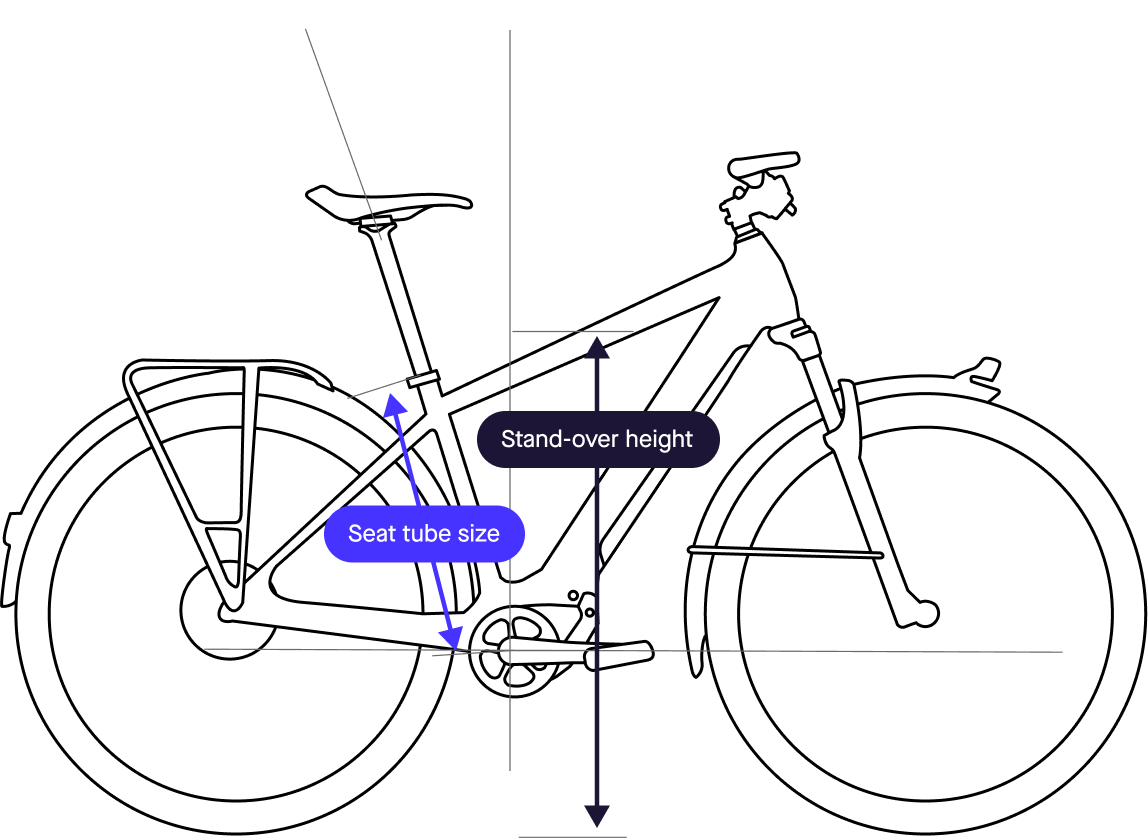 Upway’s geometry measurements are available in the “Specifications” section of all product pages
How can I measure my inseam?
To accurately measure your inseam, follow these steps:
- Gather materials: you’ll need a book (or any other flat object) and a measuring tape or ruler.
- Wear appropriate clothing: wear snug, lightweight clothing similar to what you’d wear while cycling, and remove shoes for a more accurate measurement.
- Stand against a wall and place the book between your legs: stand with your back against a wall, feet slightly apart (about shoulder-width), and your heels touching the wall. Hold the book vertically with its spine firmly pressed against your crotch, simulating the bike’s top tube. Ensure it’s level and snug against your body.
- Measure: use the measuring tape or ruler to measure the distance from the ground up to the top edge of the book. This distance is your inseam length.
You can now compare the stand-over height of the bike with your inseam length.
Aim for at least 1-2 inches (2.5-5 cm) of clearance. For mountain bikes or bikes used on uneven terrain, a bit more clearance (2-4 inches or 5-10 cm) may be beneficial for added safety.
Here’s an example:
- Inseam Measurement: 32 inches (81 cm)
- Stand-Over Height of Bike: 30 inches (76 cm)
- This gives you a clearance of: 2 inches (5 cm) = Inseam (32 inches) – Stand-over height (30 inches)
- A 2-inch clearance is generally considered ideal for most types of cycling. You will be able to comfortably stand over your bike.
How is your size recommendation calculated? Why does it sometimes differ from the data provided by the manufacturer?
In some cases, the manufacturers do not have a recommended minimum and maximum height. In these cases, the Upway team will take a precise measurement of each bike’s seat tube size in our workshop – calculated as the distance from the bottom bracket and the top of the seat tube – and then convert it into a minimum and maximum size, taking into account the fact that the saddle can be adjusted.
In other words, the minimum size indicated by Upway guarantees that you can put your foot on the ground when the saddle is adjusted to its lowest setting. This data has also been cross-referenced with thousands of measurements of bikes that have already passed through our workshop; you can trust our recommendations to be sure that the bike will fit you.
Simplified sizes (S, M, L…) are sometimes used by manufacturers to make their catalogs easier to understand. We display them when they are written directly on the bike frame or on the manufacturer’s website, and calculate them ourselves when the manufacturer does not provide them. In any case, you should not use this size alone as your guideline and instead look at height specificiations and even as far as frame geometry for a truly accurate picture.
💡 Did you know? At Upway, you always have 14 days following receipt of your bike to return it. If you realize that the electric bike doesn’t fit or that the position doesn’t suit you, simply get in touch with our team to arrange for your bike to be returned/exchanged.
Several sizes work: which should I choose?
If two different sizes are available, we recommend that our customers select the smaller of the two. This is because it’s always possible to raise the saddle, whereas it’s impossible to lower it further.
If you are slightly under the minimum size (or over the maximum size) indicated on our site, it’s very likely that the bike won’t suit you. In this case, use the “Size” filter to see only those bikes whose size is right for you. You can also reach out to our team to verify!
How do I secure my bike?
Ensuring your e-bike’s security is crucial, especially in urban areas where bike theft is common. Here are some effective strategies to keep your bike safe.
1. Invest in a High-Quality Lock
There are various kinds of locks that can be used to secure your e-bike when parked. Consider U-locks or heavy-duty chain locks that resist cutting or breaking. You can check out our locks here.
Secure both the frame and wheels to an immovable object. Using two locks can provide added security and deter would-be thieves. Some other key tips:
Secure your lock higher up, either encircling the front wheel and down tube or the rear wheel and seat tube, avoiding placement near the ground or on the top tube.
Ensure the lock is as inaccessible as possible, ideally with the keyhole facing downwards to hinder tampering.
When utilizing a U-lock, minimize space within the U between the e-bike and the object it’s locked to, leaving little room for thieves to employ their tools.
2. Pick a Smart Location
Visibility and Traffic: Choose well-lit, busy areas for parking.
Stable Anchors: Ensure the object you lock your e-bike to cannot be easily moved or tampered with.
3. Protect Removable Components
Battery Security: If possible, take the battery with you when parking. Batteries are typically quickly releasable via a key.
Component Safety: Use locking skewers for wheels and seats to prevent theft of quick-release components.
4. Use a GPS Tracker
We highly recommend using a mobile, discreet GPS tracker such as an Apple Air Tag. Some e-bikes such as Cowboy’s e-bikes have this integrated into the e-bike software!
5. Purchase e-Bike Insurance
Many home insurance providers either exclude e-bikes from their coverage or offer limited protection that doesn’t fully account for their value and unique needs. However, there are plenty of e-bike specific insurers that help you protect your bike, such as Oyster, Velosurance, and Sundays.
Securing your e-bike involves a combination of practical steps and the use of specialized equipment. By adhering to these tips, you enhance the safety of your e-bike against theft!