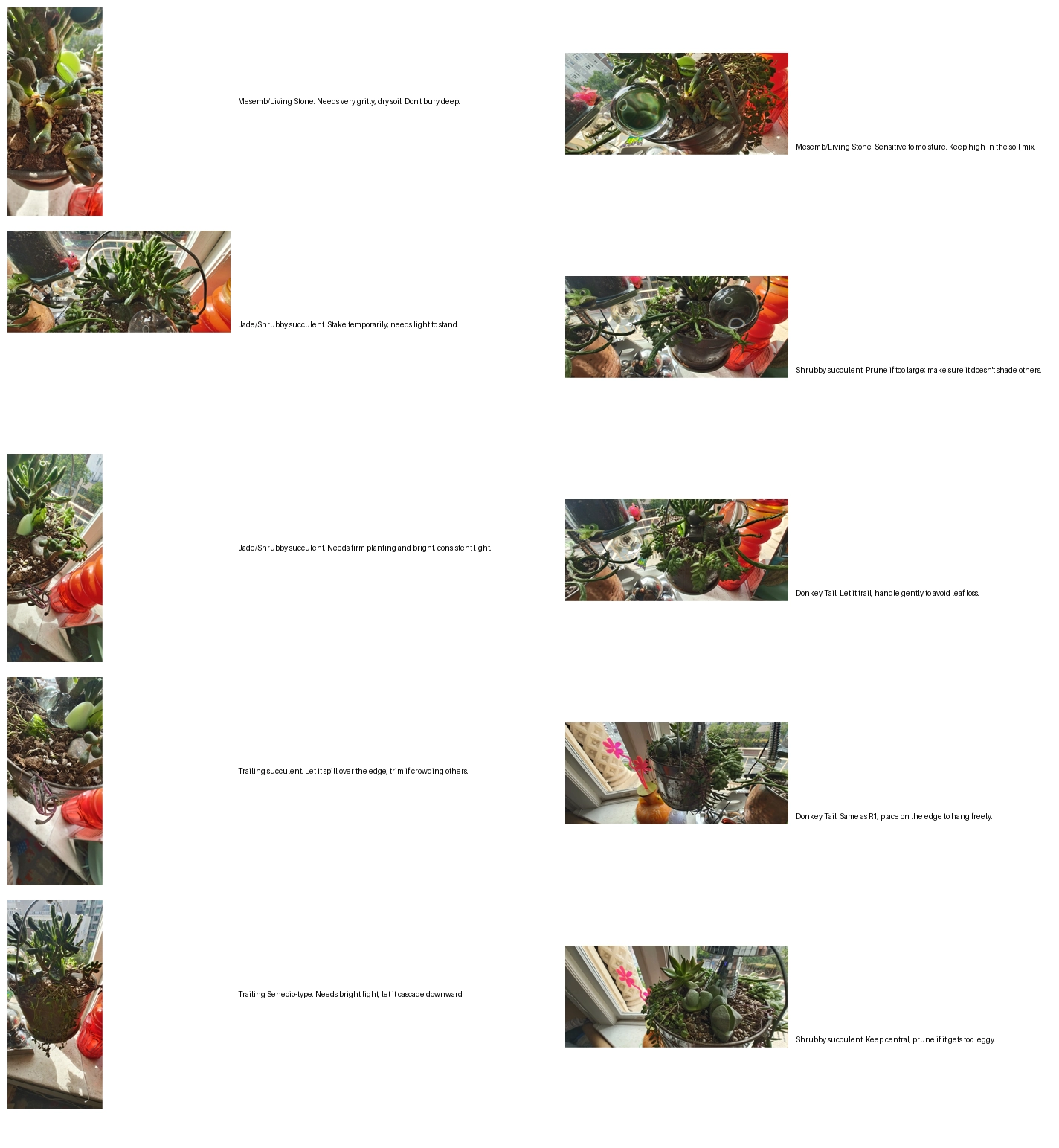
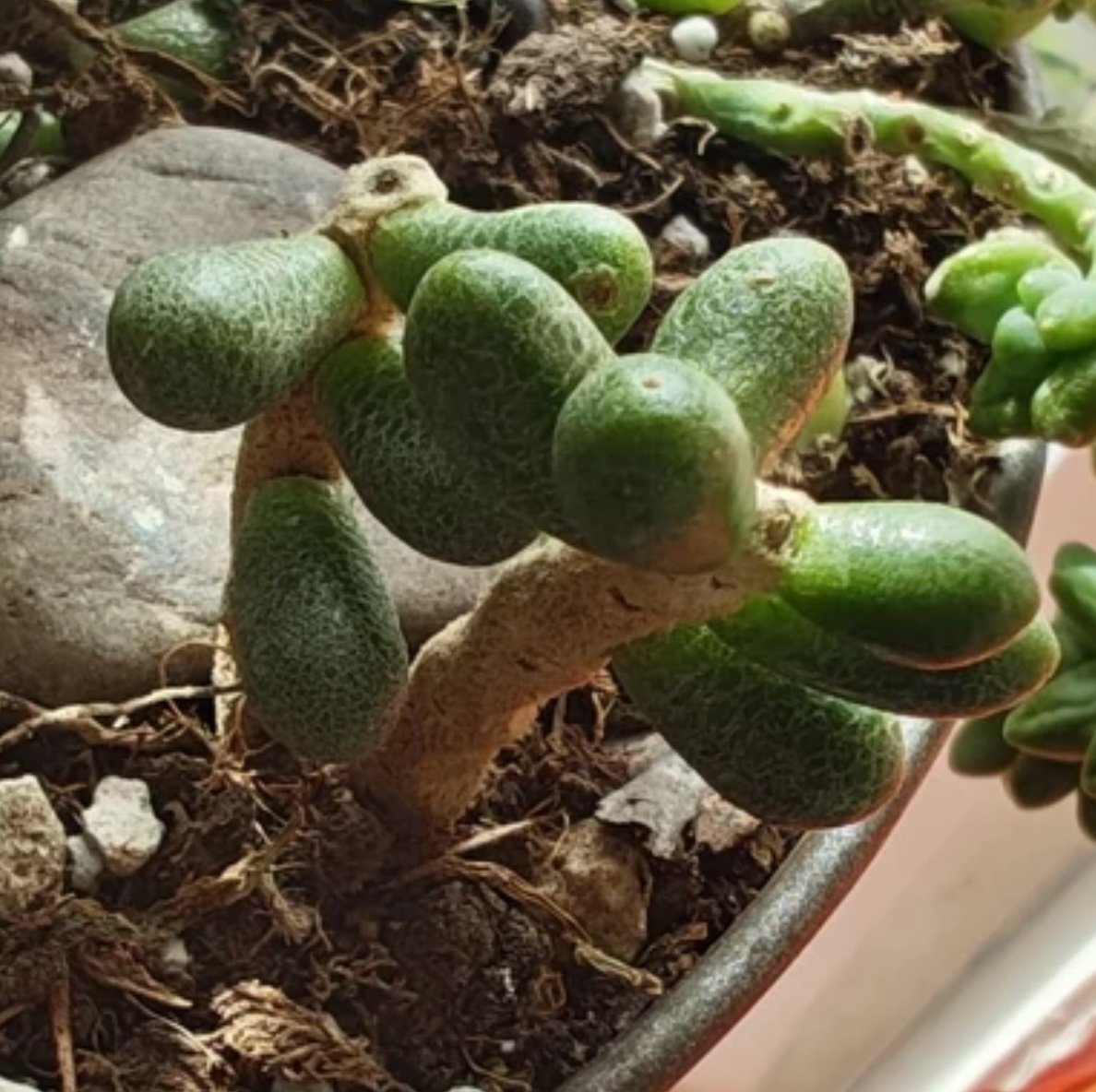
This is most likely Adromischus marianiae f. herrei, often sold as Adromischus herrei or the “Green” form.
Its identifying features are the chunky, irregular club-shaped leaves, heavily textured/netted surface, and thick woody stem. The leaves can remain green or turn reddish, purple, or brown with stronger light and seasonal stress. The species is quite variable, so an exact cultivar can’t be confirmed from this photo alone. Ruth Bancroft Garden
One care note: it is especially susceptible to rot, so your airy perlite–bark–soil mixture should suit it well. Let the mixture dry completely before watering again.
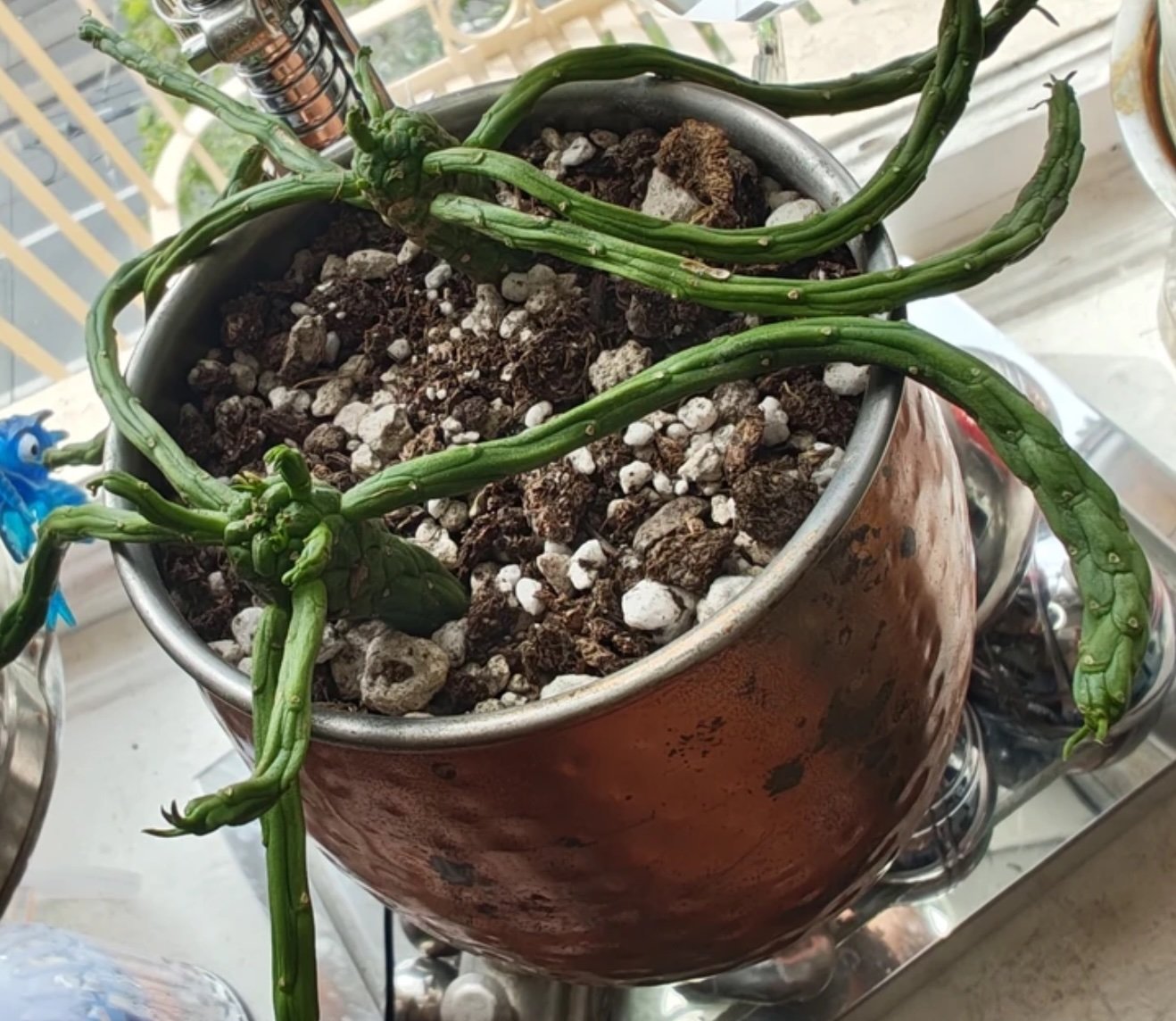
Both appear to be the same species: Euphorbia flanaganii, commonly called Medusa’s Head or Octopus Plant. The swollen centers and snake-like, finely ribbed arms are characteristic. PlantZAfrica
Their unusually long, thin growth suggests they’re stretched from insufficient light. Gradually introduce them to brighter light to avoid sunburn.
Important: this is a Euphorbia, and its white sap can irritate skin and seriously injure eyes. Wear gloves when cutting or repotting it, and ensure the metal container has drainage.
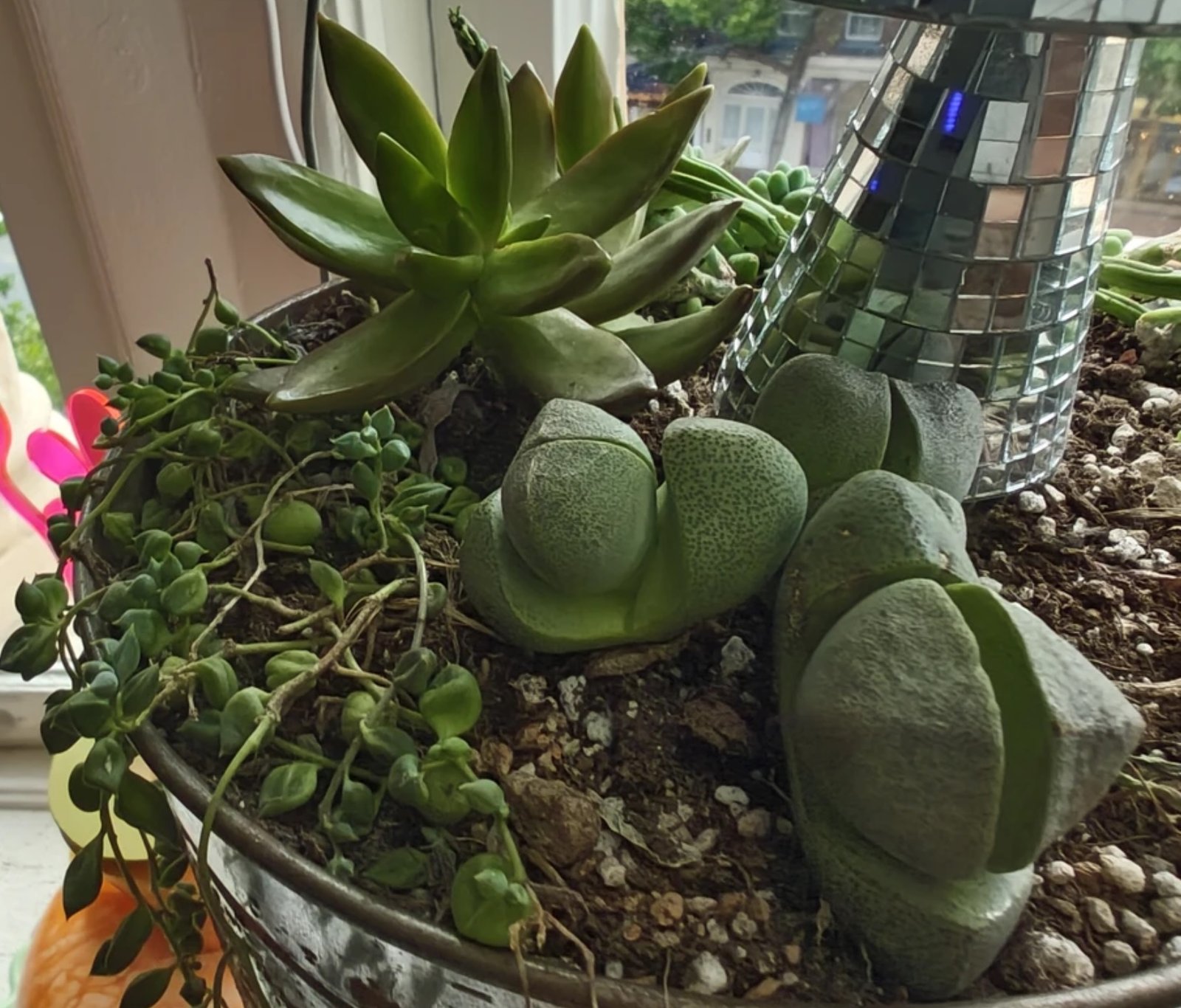
Trailing plant: String of Tears/Watermelons (Curio herreanus)
Pointed rosette: Coppertone Stonecrop (Sedum nussbaumerianum)
Rock-shaped plants: Split Rocks (Pleiospilos nelii)—several plants clustered together
The Split Rocks are retaining multiple leaf pairs, which often indicates too much water.
I’d separate them and avoid watering while the older outer leaves remain plump; the plant should absorb those leaves first.